Acquisition of Rightside by Donuts: What are the consequences on DPML Programs?

Acquisition of Rightside by Donuts: What are the consequences on DPML Programs?

At the Internet new extensions launch, Donuts operator, the biggest extensions applicant (.services, .legal, .photos, .vin etc.) has launched a specific protection program in addition to the TMCH.

The Donuts Protected Mark List (DPML) allows to block the registration by a third party of a domain name similar to the brand under all the extensions managed by the registry.

For example, if the brand “iPhone” is registered in the TMCH (prerequisite) then in the DPML, no one can register <iphone.photos> or <iphone.services>, as well as the other hundred Donuts extensions.

Other registries have also created protection programs, in common with Donuts’ DPML, on more restricted perimeters. It was the case of Rightside which managed the following 40 extensions:

.ACTOR

.AIRFORCE

.ARMY

.ATTORNEY

.AUCTION

.BAND

.CONSULTING

.DANCE

.DEGREE

.DEMOCRAT

.DENTIST

.ENGINEER

.FAMILY

.FORSALE

.FUTBOL

.GAMES

.GIVES

.HAUS

.IMMOBILIEN

.KAUFEN

.LAWYER

.LIVE

.MARKET

.MODA

.MORTGAGE

.NAVY

.NEWS

.NINJA

.PUB

.REHAB

.REPUBLICAN

.REVIEWS

.RIP

.ROCKS

.SALE

.SOCIAL

.SOFTWARE

.STUDIO

.VET

.VIDEO

At the end of July, Donuts announced the acquisition of Rightside.

What are the impacts of this acquisition on the holders of these two protection programs?

  • The DPML now integrates the extensions of Rightside, without supplementary cost.
  • It’s not possible to only subscribe to Rightside’s program anymore, you will have to necessarily turn to Donuts’ DPML.
  • It will not protect the names previously registered by third parties.
  • It excludes premium domain names.

If you want to register your brand in the TMCH and/or in the DPML, don’t hesitate to contact your interlocutor at Nameshield.

 

Irma storm and its unexpected consequences on the domain names industry

Irma storm and its unexpected consequences on the domain names industry

.TV means television, .FM, FM radio, .IO tech companies…

Actually no. In fact, yes but no. These codes do not designate sectors of activity but territories according to ISO 3166-1 alpha 2:

  • TV is for Tuvalu, a Polynesian state;
  • FM is for Federated States of Micronesia ;
  • IO for British Indian Ocean Territory.

Why such a mix of genres? In fact, domain names and geopolitics make a whole.

When you communicate with a .COM domain name, you trust Verisign, an American company. With a .FR, it’s the AFNIC! For the .TV, nothing to fear, this extension is technically delegated to Verisign. And for the .IO, it will be said that the infrastructure is fairly resilient. Why mention this reality?

Simply because geopolitics are moving, political events have frequently cut off domain name extensions. This is the case of .LY, which corresponds to Libya. For example, South-West professionals communicating in .SO met some technical problems when Somalia has cut its DNS infrastructure for some time.

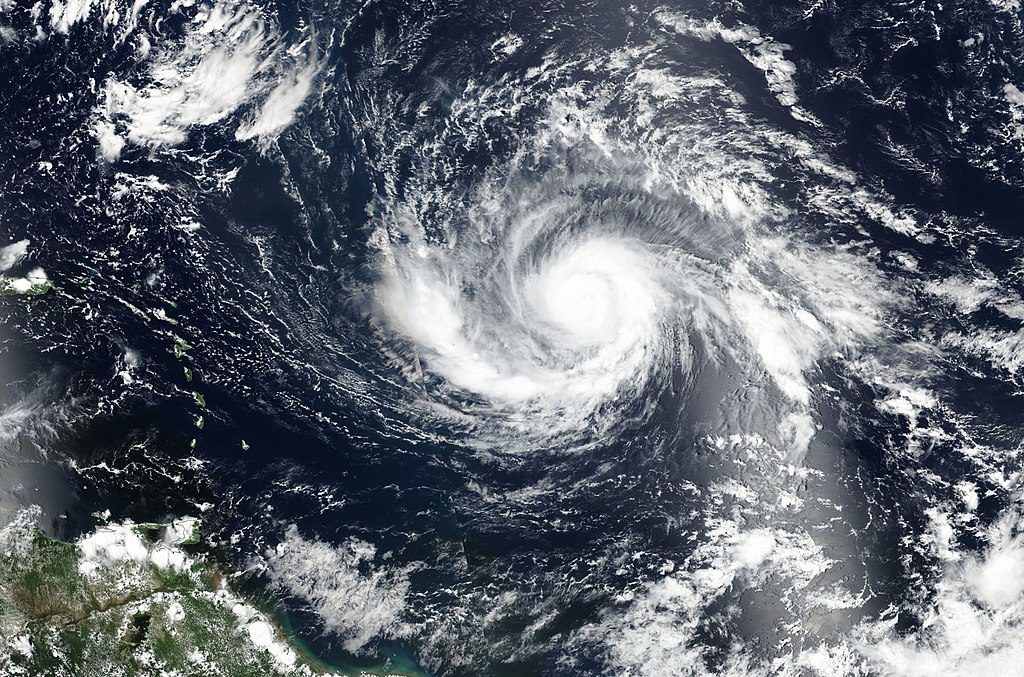
Precisely, that’s what happens with the .AI. AI for Artificial Intelligence? Not at all, it is the country code of Anguilla, a territory heavily affected by Irma Hurricane. Thus, many companies using .AI domain names have encountered difficulties in registering, managing or renewing their domain names.

But then, how do we do? This is precisely what is exciting in this intangible industry: if no guide is available to track real-time geopolitical movements and the consequences on registries’ DNS availability, Nameshield informs you in real time.

Do not hesitate to contact us if you have any questions.

.BRAND : 4 episodes, for this summer

.BRAND : 4 episodes, for this summer
Photo : CC BY-SA 3.0 Nick Youngson – source : http://nyphotographic.com/

Act 4: Reconstruction

While a myriad of new extensions were open for recording, the time was to select .COM, .CM, .OM, .CO or .CAM records? .FR or .FRL?

The decision to make registrations in all new extensions of course has a high cost and is no longer necessarily wise.

This is also why, some brands have chosen a .BRAND: its own TLD, its own sovereignty, its own management rules! Many brands have opted for this configuration and we can see now the blooming of .BNPPARIBAS, .ALSTOM, .SNCF, .LECLERC, .GOOGLE …

This reflection on .BRAND has sometimes been badly conducted: some brands have now abandoned their own TLDs, such as McDonald’s. ICANN has a list of these TLDs, along with the very formal letters from the companies asking to remove the area of ​​confidence, historically so costly. It reminds me of The Fallen Astronaut. We can say that the abandonment of these TLDs will be used for others to build themselves up. A good general uses the strength of the enemy as Sun Tzu said!

These discontinuations show that the companies concerned have not seen today the benefits they could make from the costs associated with the creation and management of a .BRAND. Others, more daring, have discovered the interest and / or imagine discovering new service opportunities allowing them to have an increased or even total control over their infrastructure to come with high stakes, Internet of Things, Industry 4.0 …

Let’s wait for the first connected objects and the deployment of a real infrastructure around a resilient .BRAND and we’ll see!

Read act 1: Denial (and Anger)

Read act 2: Expression

Read act 3: Depression


How horse names resemble trademarks

How horse names resemble trademarks

Trademarks identify a particular product or service and enable consumers to quickly identify the source of a given good. In order to meet this function they must be distinctive. Trademark law protects the owner’s right to use the trademark exclusively and prevent others using a mark that is confusingly similar. Use of an identical mark on the same product would be considered confusing and could clearly constitute infringement.

So far so good. But are you aware that the same standards exist for naming pedigree horses?

WorldFengur is the Icelandic committee in charge of the official register of the Icelandic horses breed. They have recently passed a rule stating that names must be of Icelandic heritage for them to be included in the official database. There are more than 400,000 horses registered across Europe and the USA. The two-person Horse Naming Committee has been set up to stop people giving obscene names to their horses but mainly to ensure that the names respect Icelandic tradition and grammar rules. It seems that purchasers don’t want their Icelandic horses to have foreign names.

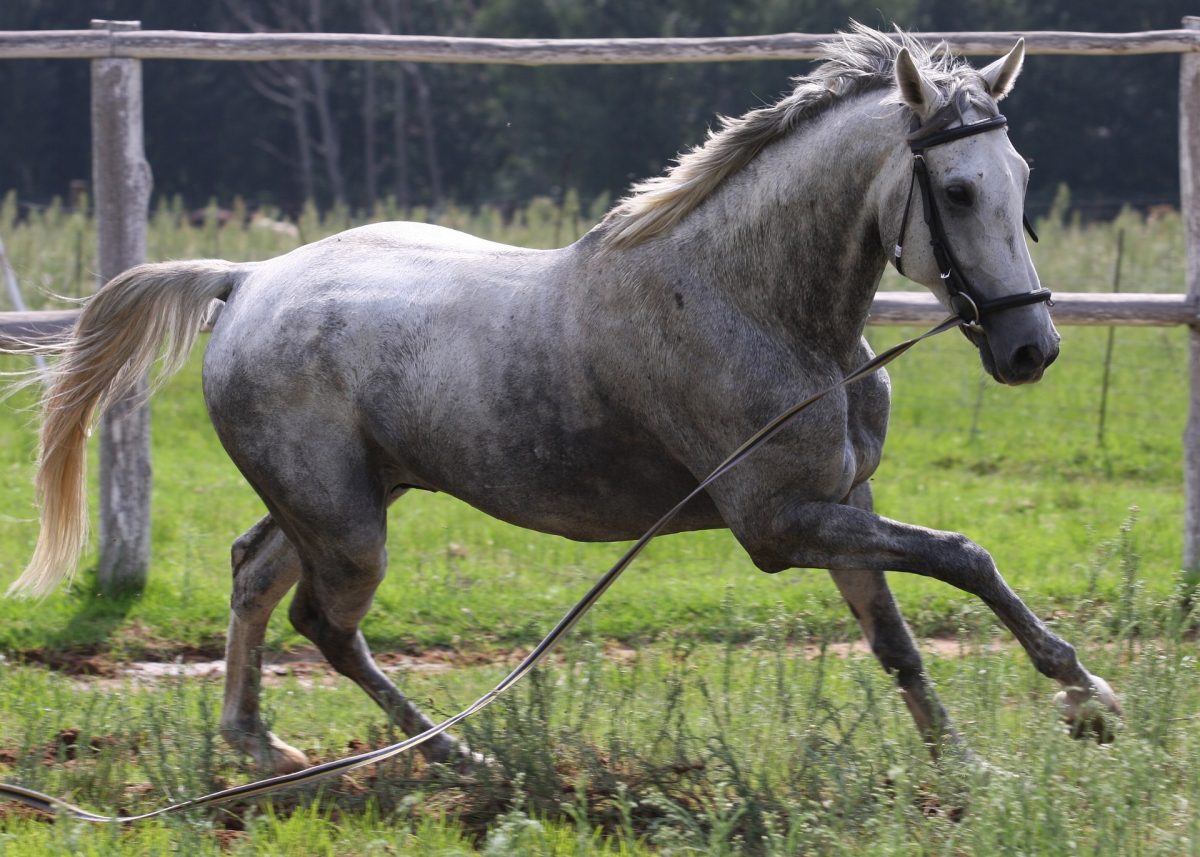
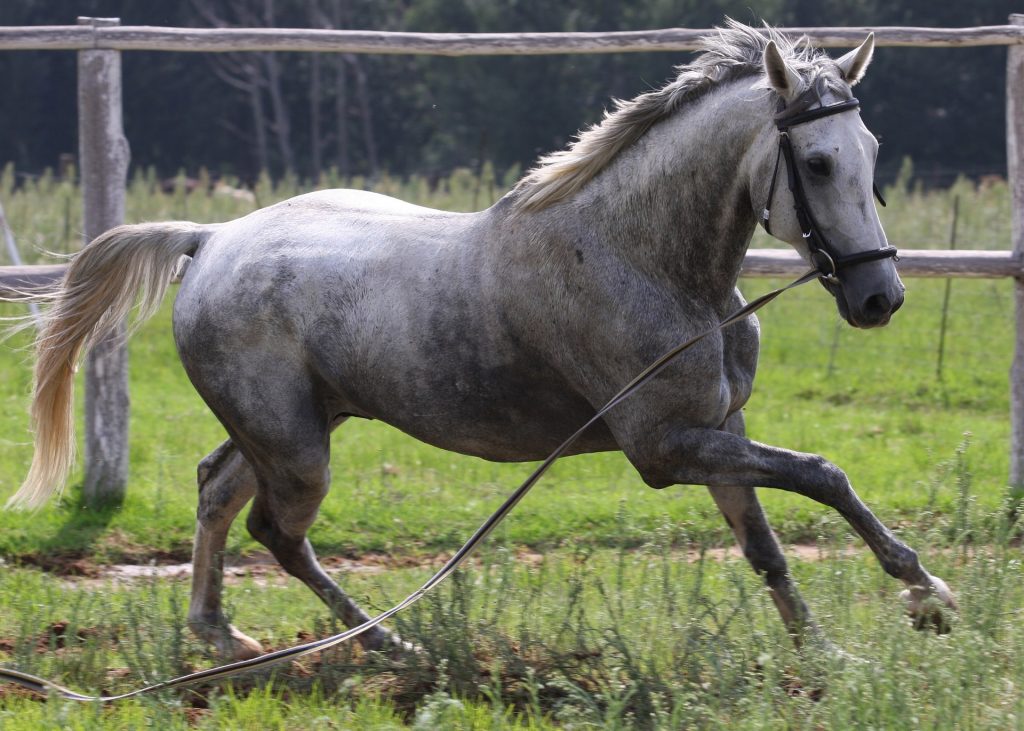
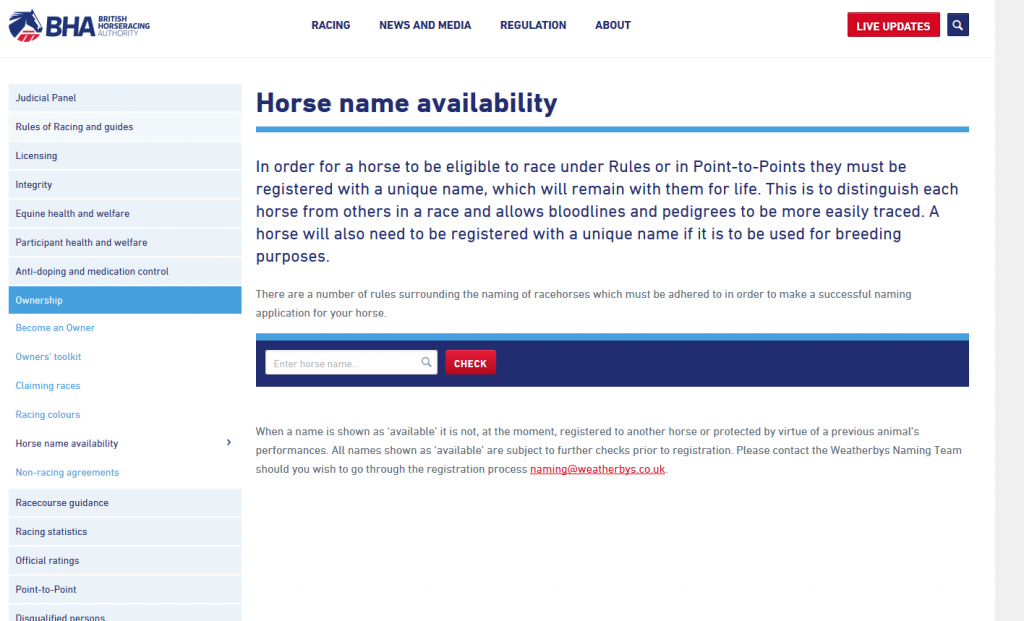
Other countries have naming rules for horses too. The British Horseracing Authority (BHA) controls the appropriateness of names when horses are added to their database. In addition to being available – like trademarks – there is a long list of criteria that applicants need to meet. Here are some of the restrictions on name availability:

  • Names of more than 18 characters, including signs or spaces
  • Names followed by one or more numbers or which start with a sign other than a letter
  • Names made up entirely of initials, or which include figures, hyphens, full-stops, commas, signs, exclamation marks, inverted commas, forward or back slash, colon and semi-colon
  • The name of a public person or names of commercial significance without the appropriate permission
  • Names considered in poor taste or which may cause offence.

Further, when applying to the BHA for your name approval you need to supply two proposed names in order of preference with an explanation of the origin or meaning of the name. This all sounds familiar – a bit like applying for a drug marketing authorisation. One fun difference is that there is a Horse Name Availability Search tool that will not only tell you if the name is free but will provide some great alternatives if not.


How horse names resemble trademarks
British Horseracing Authority website

Trademark bullying? The Glencoe story

Trademark bullying? The Glencoe story

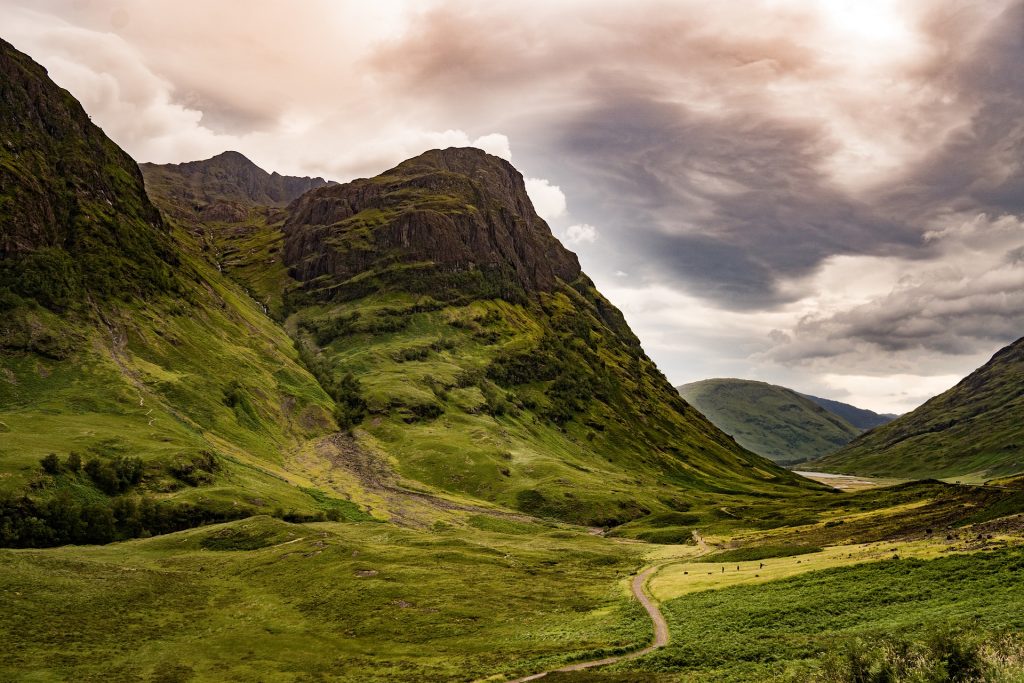
Glencoe is an “unforgettable place of dramatic mountains, rare beauty and haunting history” in the Scottish Highlands.

It is also a UK trademark, registered by several companies including The National Trust for Scotland. NTS’s 2016 trademark is registered for goods including beauty products, jewellery and clothing. A prior UK Glencoe mark protecting articles of clothing was registered in 1996 by Glenmuir Limited, a “family-run business dedicated to producing the finest golf wear” but it does not currently appear to be used on any articles of their clothing.

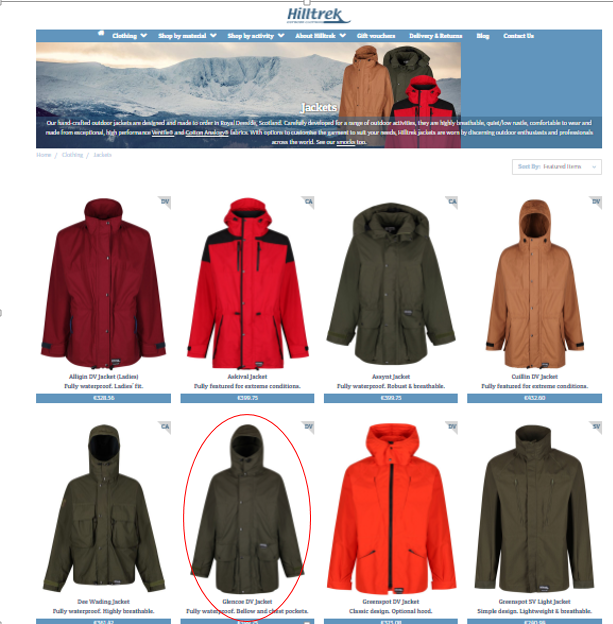
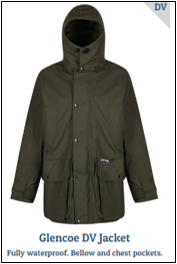
It is similarly the name that Hilltrek Outdoor Clothing gives to one of their hand crafted outdoor jackets.


The company, based in Aboyne, on the edge of the Highlands, has a 30 year history of manufacturing quality outdoor clothing. They have a long standing policy to name their jackets after some of their favourite places in Scotland. On the website you can find a link to a glossary providing information about the names and places used for their clothing.

Earlier this month Hilltrek owner Mr Shand received a cease & desist letter from NTS demanding they stop selling the Glencoe jacket. Mr Shand was surprised that a place name could be registered as a trademark. The Hilltrek website respects trademark rights, displaying the ® symbol next to several marks but not Glencoe.

The letter instructed Hilltrek to stop selling any goods bearing the name Glencoe immediately and refrain from using the name on any future products. Mr Shand published the letter that he found “bullying and threatening” on social media, saying that he would have understood and preferred a polite letter explaining the situation and asking for a dialogue.

This case raises serval interesting points for consideration.

Is it correct to register a place name to thereby blocking others from using it? NTS says that their aim is to protect the properties in their care and stop them being exploited. They encourage and support local business but have contacted a number of companies using trademarked names which are not local, including businesses based in France.

It is important to show tact when defending your IP rights in cases such as this. Reacting too harshly can result in this case with negative media attention for the complainant and great advertising opportunity for the “infringer”.

Which both underline the necessity of obtaining professional advice from an experienced IP Counsel whether you are defending a trademark or using one, even if you are not yet aware of it.