Nameshield: The first French registrar certified ISO 27001 on all its registrar activity

Nameshield's ISO 27001 certification


Nameshield is proud to announce its ISO 27001 certification on all its registrar activity, the product of many months of work.

Why the ISO 27001 certification?

Since its creation, 23 years ago, Nameshield has taken to heart to provide to its customers the best services under conditions of optimal security. By choosing the ISO 27001 standard, this constant care given to all our services is now certified by a competent authority.

The impressive rise of the occurrence and the force of the cybercriminal attacks has comforted the founder and CEO of Nameshield, Jean-Paul Béchu, in his determination to propose to all our users an ISO 27001 certification on all our registrar activity.

Today, it’s frequent that cybercriminals attack services providers in order to reach indirectly their final targets. And if our Security Officer of Information System monitored already the security of our infrastructure, the ISO 27001 reinforces the requirements.

If Nameshield has engaged in this process, the result of an important investment, human and financial, it’s because it’s essential for us to demonstrate and certify the dimension of our engagement in term of security.

To be certified ISO 27001 is to ensure our customers and partners that the security of the Information systems is completely integrated and that Nameshield is committed to a process of constant improvement requiring specific resources, which we have chosen to deploy.

The certification confirms the competence of Nameshield’s employees and their expertise in the protection of critical information.


What is the ISO 27001 certification?

ISO 27001 is an international standard which describes the requirements for the establishment of an Information security Management System. This one is intended to choose the security measures to set up in order to ensure the protection of sensitive goods of a company on a defined perimeter. In the case of Nameshield, it covers all of its registrar activity.

At a higher level, the ISO 27001 standard requires that the managers of the company are involved in the cyber defense. In parallel, a steering committee follows the implementation of the new arrangements respecting the standard.

An audit carried out by LRQA, the World Leader of the certification of value added Management systems, allows us to deploy our security measures and to become the first French registration office to be certified on the complete perimeter of its registrar activity.

Nameshield, your trusted partner.

 

.BRAND : 4 episodes, for this summer

.BRAND : 4 episodes, for this summer
Photo : CC BY-SA 3.0 Nick Youngson – source : http://nyphotographic.com/

Act 1: Denial (and Anger)


The brand, a forbidden territory. Everything is played out by attacks, complaints, courts. A ruthless world. Since the 23rd of June 1857 and the creation of the first system of trademarks by France, it is possible to benefit from an exclusive right of use for a term on different applications. Otherwise the law is coming. The arrival of the Internet will shake up this foundation.

If one remembers the Milka conflict with Kraft foods, which led to the famous opposition between Milka Budimir, a seamstress in Bourg-lès-Valence, and the American giant Kraft Foods about the domain name milka.fr, we can keep in mind the case of many domain names holders who succeeded in winning attacks against those bigger than them.

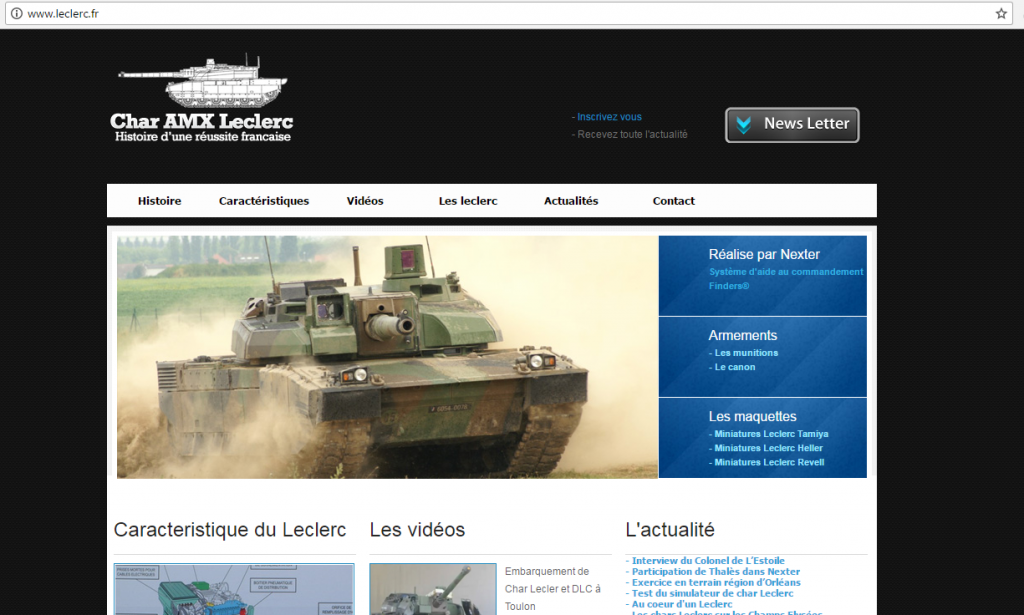
The expression of David vs Goliath is illustrated in France with leclerc.fr, domain name registered by a fan of the Leclerc tank. In spite of an attempt at recovery of SYRELI type, the tradesmen never succeeded in obtaining this famous domain name. For posterity, the justification of the individual will be retained in his argument: “… in life there are not only shopping centers and consumption, France is above all, a country of history, a strong history of which we can be proud!”


.BRAND - Leclerc.fr website
Leclerc.fr website


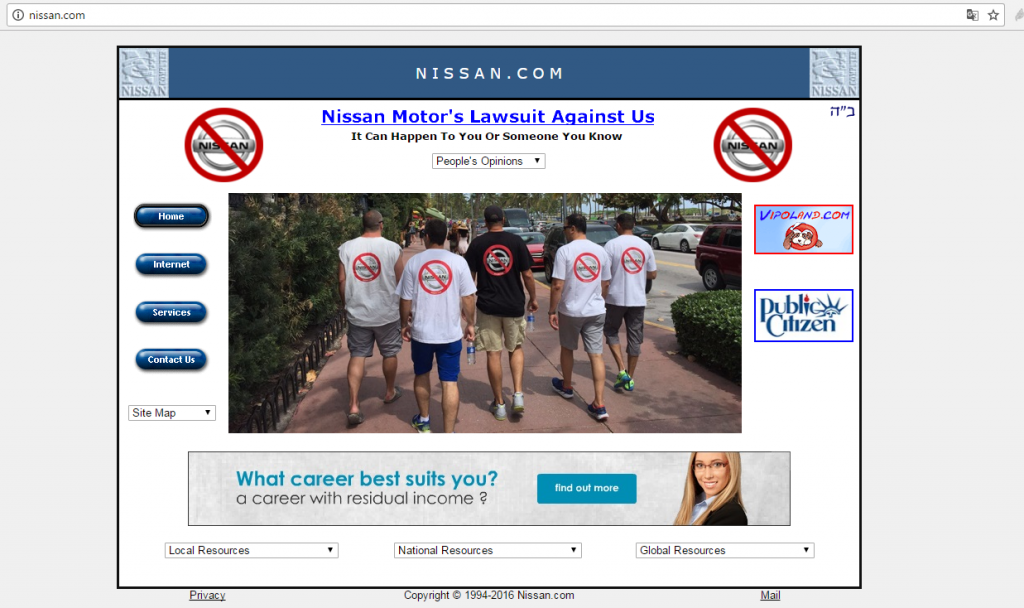
In the United States, the case of Nissan Computers is interesting. The little known IT company was registered after the name of its owner, Uzi Nissan. The eponymous Japanese company Nissan Motors evidently pouted at the deposit of nissan.com and tried to recover the domain name in question. Despite an incessant media campaign and numerous attacks, today nissan.com remains the property of Nissan Computers. Nissan Motors now uses nissanusa.com for its US business. In this case, the Nissan.com website only reflects Nissan Computers’ computer sales activity. We can instead find a strong attack against Nissan Motors. A bad buzz in action!


.BRAND - nissan.com website
Nissan.com website


What can we keep in mind through these two experiences? A relatively interesting bone marrow: the domain name, this intangible asset representing the image of a company, has not been sufficiently monitored by multinationals.

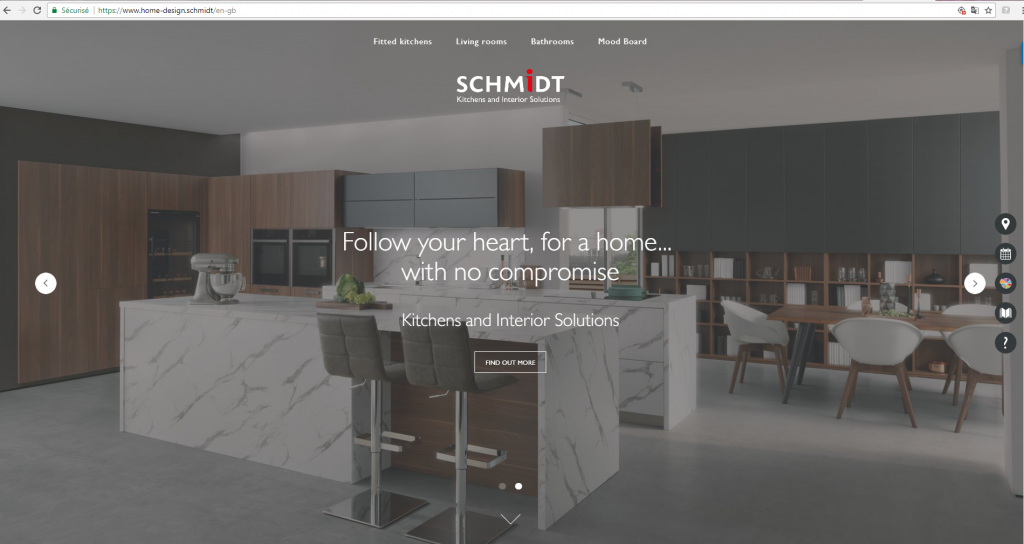
Schmidt launches its new website in dot brand: Home-design.schmidt

Schmidt is one of the first French brands of kitchens, but also the first kitchen furniture export company in France.

Schmidt group has decided to launch its new website in « .brand » (dot brand), .schmidt and thus has joined many big companies which have made this bet, like BNP Paribas (mabanque.bnpparibas), MAIF (voyagepro.maif), Club Med (corporate.clubmed) or the latest, SNCF (oui.sncf).

Schmidt chose to regroup its activity under the « home design » designation which describes well its industry. The company is not only dedicated to the kitchen world but also proposes bathrooms and “custom-made” furniture for the entire house: dressing, TV furnitures… all with a design touch.

The domain name home-design.schmidt allows on the one hand, to optimize the SEO and on the other hand, to facilitate its development and its international communication. After its launch in Great Britain at the end of April, the website arrives in Belgium, and will continue with Spain, Italia and Switzerland by July the 4th.

The domain name home-design.schmidt is easy to recognize and to remember for general public.

dot brand - Home-design.schmidt website
Home-design.schmidt website

But what is the benefit for brands to have their own extension?

In 2013, some companies (including some thirty French companies) wished to have their own « .brand » extension, in order to capitalize on their leading brand. Most of them wanted to secure and protect their naming spaces (to limit intermediaries in the chain of actors involved on a domain name registration). The purpose is also to have a domain name really distinctive and reassuring for the final consumer. The brands fight against cybersquatting, but this is an endless war. It represents an important annual budget and doesn’t limit the damages enough. The message of the brands owners of a « .brand » (dot brand) is the following: If you’re not on my « .brand » website, then you don’t buy the products or services of my brand.

This practice to communicate in « .brand » isn’t known enough by the general public. Of course, the consumers’ awareness should be increased in order to use extra caution during their navigation, and that means the domain name verification.

So having its « .brand » is a differentiating factor and will be more and more used for marketing purposes.

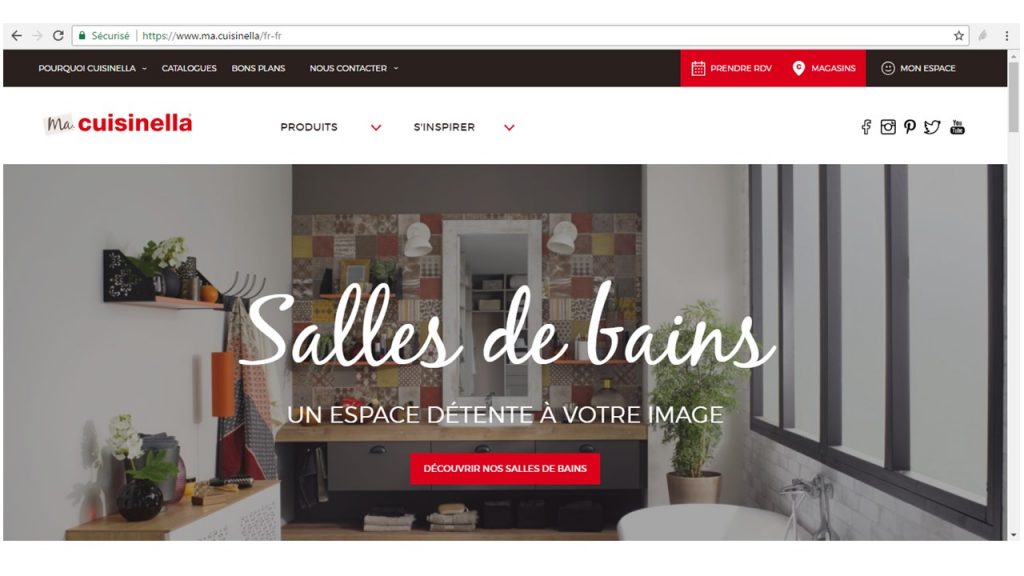
.brand - ma.cuisinella website
ma.cuisinella website

Bitter taste to confectionary disputes

KitKat Nestlé - confectionary disputes


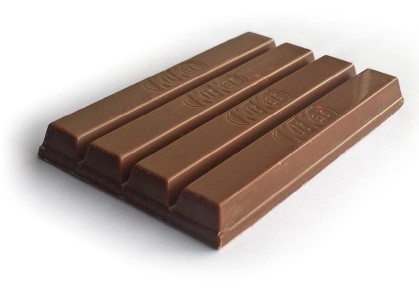
Last week the UK Court of Appeal ruled on the long running battle between Nestlé and Cadbury (owned by Mondeleze) over the attempt to register the shape of the KitKat bar in the UK.  Trademarks need to be a “badge of origin”. In particular registration of a shape mark requires good evidence of acquired distinctiveness to show that consumers rely on shape in a “trade mark sense”. The UK court has ruled that this is not the case for the KitKat shape. The mere fact that consumers recognise the mark is insufficient and the applicant must demonstrate that a significant proportion of the relevant public rely on the mark to indicate the product origin.

KitKat Bar - shape mark

Once again this shows how applications for non-traditional marks are more vulnerable to objections for lack of distinctive character.

But it is also interesting that the industry continues to fight these costly battles. Most of us might view these disputes as irrelevant and a waste of money but the parties involved see them as a battle for an all-important edge in the marketplace. The confectionery industry is extremely competitive – the aim is to ring-fence your brand and intellectual property rights in order to block others from cutting into your space.

There are quite a few registered shape marks in the world of confectionery and many of them have seen some level of trademark dispute.


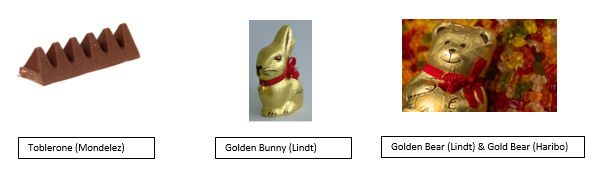
Some well-known shape marks:

Bitter taste to confectionary disputes

The maker of the Golden Bunny, Lindt, launched a chocolate teddy bear. Haribo, which invented gummy bears in the 1920s, said shoppers would confuse the two products, even though Lindt’s bears are made of chocolate and gummy bears are jelly sweets.


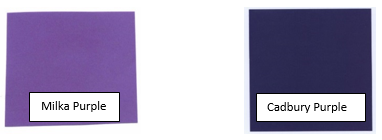
Examples of colour marks:

Color marks

Both these shades of purple are used for chocolate products and are owned by Kraft / Mondelez. But there has been an ongoing battle between Nestle and Cadbury about the legitimacy of use as a trademark. The British public has linked this shade of purple with Cadbury for over a century in the same way that the Milka shade is well accepted by a wider European consumer audience.

Cyber-blurring: the strategy used by Macron’s digital team to face cyberattacks

Cyber-blurring - the strategy used by Macron’s digital team
Photo : www.gouvernement.fr


May the 5th , 2017, two hours before the end of 2017 presidential campaign, thousands of documents owned by the campaign team of the candidate Emmanuel Macron have been leaked and have been made public on American forum 4Chan, relayed by Wikileaks. Social media have played an important role in the attack and content diffusion: internal discussion of the political party, briefing notes, pictures, bills, accounting, which represent 9 gigaoctets of hacked data.

Since the beginning of the presidential campaign, it wasn’t the first attack faced by the team of En Marche’s candidate.  Alerted of a potential attack a long time ago, they have set up a cyber-blurring strategy to defend themselves. This method creates dozens of false documents (false emails, false passwords, false accounts) trying to slow down hackers’ work. This strategy is often used in the banking field to protect their customers. (This diversion method is also called digital blurring.)


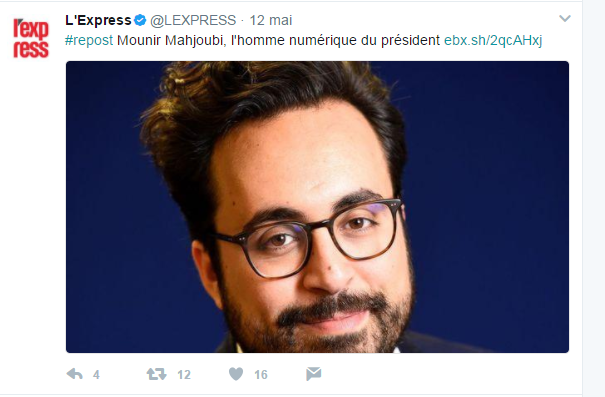
L'Express Twitter account - Cyber-blurring: the strategy used by Macron’s digital team to face cyberattacks
L’Express Twitter account


Even if Mounir Mahjoubi, digital director of the En Marche campaign, thinks to have slowed down the hackers’ job with this cyber-blurring method, despite these measures, the attack was not avoided.

The hackers didn’t ask for money in exchange of the documents publishing. These documents which are not compromising for the Emmanuel Macron’s team, were not monetizable because the hackers would have to sort out 9 gigaoctets of data in a few period of time.

Consequences are few on the presidential campaign and the En Marche staff was not really affected. This counterattack was well implemented.

The hackers who were against Macron, didn’t have the success desired. Nevertheless, this failure will get them to become smarter, more ingenious, less visible and better prepared for a next attack.

To be continued.