 Title : Adwords – Author : Christophe Benoit – Photo : licence CC BY 2.0 – www.tyseo.net
What is a “Sponsored Link”?
It’s a paid advertisement in the form of a hypertext link that shows up on search results pages. The ads are typically for products and services that are generally or very specifically related to the keywords in the search query.
The most well known sponsored links, Google Adwords, is an advertising service offered by Google for businesses wanting to display ads on the search engine and its advertising network. Businesses set a budget for advertising and pay when people click the ads.
“Google Adwords, is an advertising service offered by Google for businesses wanting to display ads on the search engine and its advertising network.”
What appears on your screen when you use an online search engine?
Results returned by a Search Engine typically fall into 2 categories:
- Sponsored links (adwords): The customer bids on keywords and the advert (usually a small amount of text and a hyperlink) is displayed in a priority position, but only if the searched keywords match those that have been purchased by the advertiser.
- Organic search listing: The results in this listing are based upon the relevance of the content on websites that have been referenced by the search engine being used.
On Google’s search results page, the two types of results are displayed differently
- Sponsored links (adwords) are posted at the top of the list of results with the heading “AD”
- Organic results are displayed in an order that depends upon how well they match the search query.
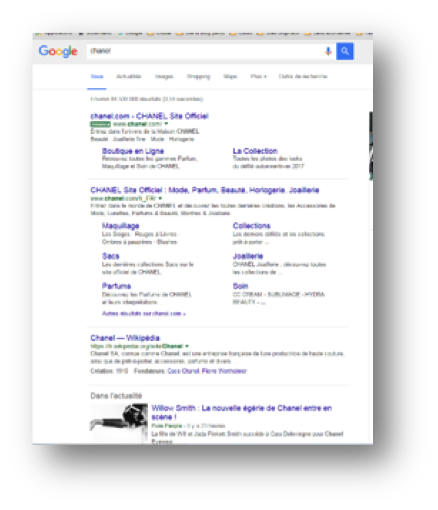 The criteria taken into account by Google in order to display sponsored links are the same as organic listings in addition to taking into account the geographic location of the searcher.
Adwords can be purchased on a specific geographical area (a continent, country, region or city). Google uses the IP address of the computer on which the search request is being submitted to determine which sponsored results to return.
“Google designed Adwords to be a fully automated service that facilitates the selection of keywords and advert creation.”
Google’s Adwords service
The search engine that is targeted the most by unauthorised practices is Google that, for scalability reasons, designed Adwords to be a fully automated service that facilitates the selection of keywords and advert creation.
Given that, in the last quarter of 2014, sales of Google Adwords were estimated to be $10.50 bn on a net total revenue of $16.96 for the year, we can better understand the importance of this service.
“Google is acting only to host the advert on its advertising network and therefore its responsibility is limited.”
In order to avoid abuse, it is essential that the advert which appears after having typed a search term allows the normal internet user to know whether the Adword, which is promoting products or service, belongs to the brand owner, is a business linked to the brand or a third party organisation. It sits with the advertiser to choose one or more keywords, which determine when the advert is displayed. Therein lies the subtlety of Adword definition.
In this case, Google is acting only to host the advert on its advertising network and therefore its responsibility is limited with respect to inappropriate or adverts linking to counterfeit goods. Indeed, to determine the liability of a search engine, a judge must look at the degree of automation in order to determine whether the role of the operator is neutral or not. If there is no control of stored data, liability of the search engine operator cannot be proven.
Various court rulings have declare that Google was not a counterfeiter despite proposing keywords, which reproduce distinctive marks (including registered trademarks) by storing and displaying adverts based on keywords. According to the courts, Google does not use these Keywords “in its own business communications”. That is to say, that Google makes keywords available to third parties but does not use that in its own publicity.
Court cases related to Adwords
With most Pay-Per-Click (PPC) programs on search engines, it is easy to buy competitors’ brand names as a keywords. For ethical reasons, this practice is not recommended. However, some less scrupulous companies do not hesitate.
Internet abuse, such as traffic diversion, cybersquatting, copycat website and counterfeiting products and services are still widespread on the Internet. However, on sponsored links, brand hijacking remains the most prevalent.
“On sponsored links, brand hijacking and traffic diversion are the most common forms of abuse.”
Brand hijacking can take two forms:
- An advertiser buys a registered trademark as a keyword in order to have its adverts displayed when Internet users are searching for a particular brand
- An advertiser places the brand in the text of its sponsored link advert which appears prominently on the search engine results page
These infractions have resulted in a number of well-publicised court cased where the definition of an Adword was recalled, such as:
These cases demonstrate the importance of the presentation of the advert so that it does not reproduce, in any way, a trademark registered by a third party in the Advert. In doing so it must not deceive the average consumer of the essential representation and functioning of the mark (as a function of its origin, as a function of its promotion, as a function of the investment in and reputation of the mark).
In the face of these very real threats, what steps should brand owners take?
It is essential that a brand owner files one or more trademarks for their brand. In order that proof of registration can be submitted in any complaint to the search engine or Advertising Network provider or in launching a legal action.
“Recent court cases reinforce the importance of presenting an advert so that it does not reproduce, in any way, a third party registered trademark.”
Reduction of brand risk is all about speed. It is as much about speed of detecting an infringement or fraudulent practice as it is about selecting the appropriate remedial action.
It is therefore important to actively monitor sponsored links for infringements rather than waiting to be made aware of an infringement by a disgruntled prospective customer who has purchased a counterfeit product in error.
Monitoring of Adwords should be a part of a multi-layered brand protection programme that is right for your business. Such a programme may include some or all of the following elements: Trademark monitoring, domain name monitoring, website discovery, search engine monitoring, content monitoring, sponsored link discovery, social network monitoring, and affiliate control.
“Monitoring of Adwords should be a component in a multi-layered brand protection programme that is constructed for your particular business needs.”
Building a brand protection programme that fits the needs and risk profile of the brand puts you in control of threats to your brand and allows you to respond with an appropriate level of rapidity and robustness.
If you have discovered a brand infringement on a Sponsored link network, it is important to know that it is possible to request that the hosting network remove adverts that misrepresent or use identical or near identical terms contained in a registered trademark. If your brand is suffering from widespread infringement and abuse such activities can be outsourced to specialist online brand protection which can handle as much or as little of the brand protection operation as the brand owner desires, from a simple detection service to a full suite of detection, analysis and enforcement capabilities.
“Building a brand protection programme that fits the needs and risk profile of your brand puts you in control of threats to your brand and allows you to respond with an appropriate level of rapidity and robustness.”



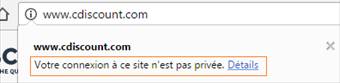
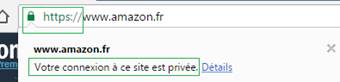
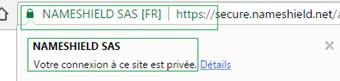
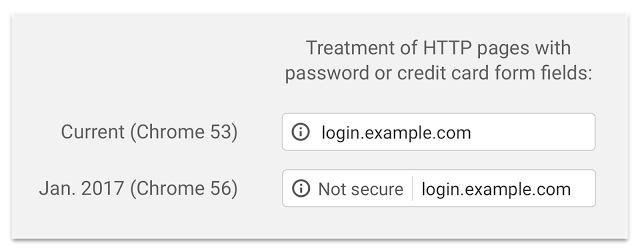
 Chrome 53 launched on 31 August 2016 and with it Google is continuing its offensive for a safer internet.