Abandoned domain names vs renewed domain names: any observations?

Abandoned domain names vs renewed domain names - Nameshield
Image source: JanBaby via Pixabay

As a registrar, Nameshield has an accurate view of the typology of abandoned domain names and domain names kept by their holders when they clean up their portfolio.

As in all sectors of activity, phenomena that could be said to be “trendy” can even be seen in cybersquatting and therefore in domain names that are abandoned or maintained.

Let’s take the example of typosquatting, there was a time when it was essential to register domain names that included your trademark with as many typographical variants as possible (if your trademark contained the letter O, it was important to register a version with the number 0 instead of the O etc.), because cybersquatters were then very focused on this type of hijacking attempt. A decade later, cybercrime has changed and, while it is still important to register typographical variants, only the most pertinent ones are relevant today. As a result, many companies have abandoned the most distant variants.

The same goes for extensions. At certain periods, the risks of cybersquatting are greater depending on the registration conditions. A “first-come, first-served” extension is more at risk than a TLD requiring, for example, a locally registered trademark. Since the domain names registrations rules are set by each registry, they are likely to change over time, with the result that potential abandonments may occur.

An interesting study published at the end of 2019 by Frank Moraes, indicated that considering the first 8 extensions, only 29.79% of registered domain names would be renewed each year. Of the remaining 70.21%, 41.22% would simply expire and 28.99% would be registered by a new holder.

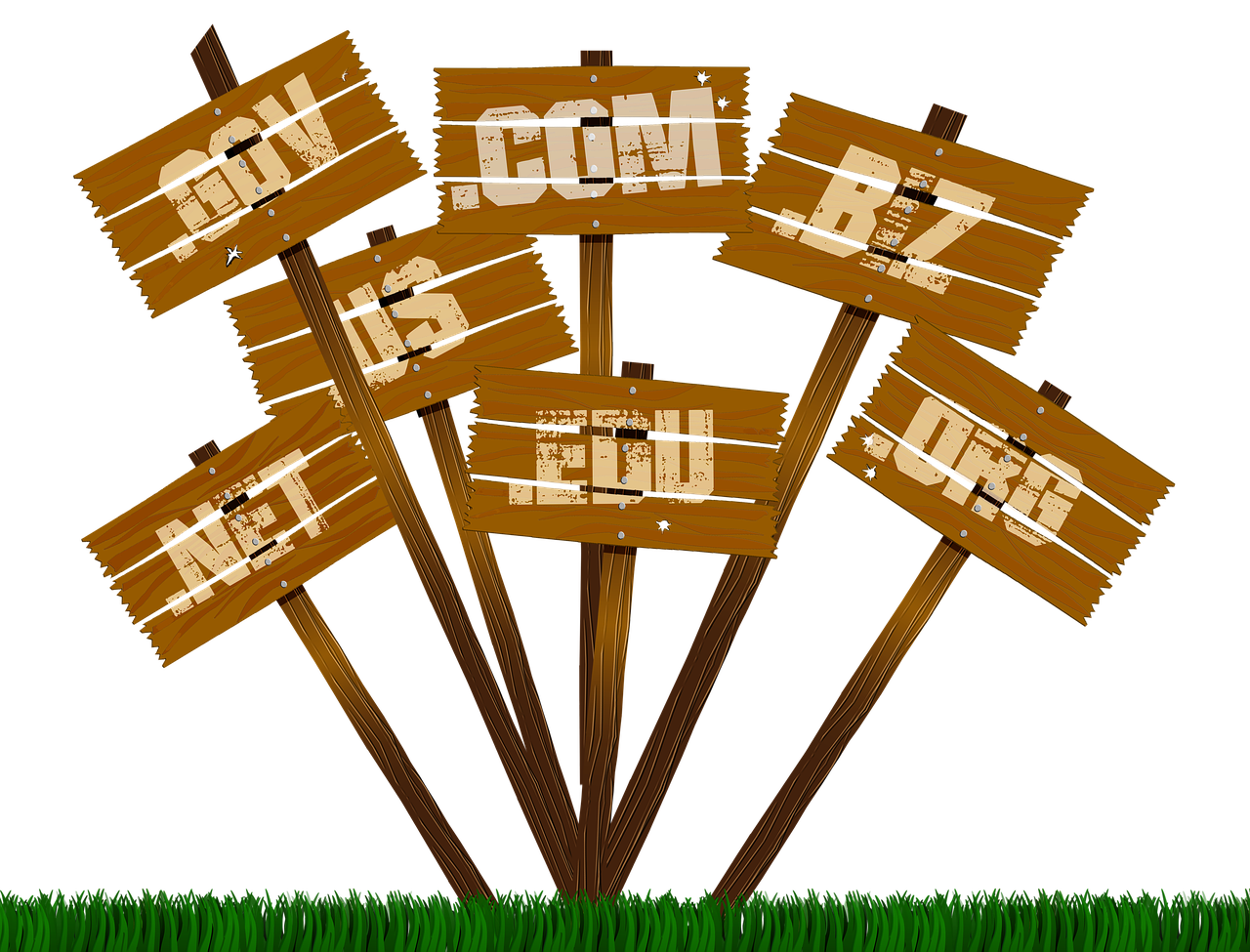
Only one domain name out of three would therefore be renewed the year following its registration! However, the rates vary significantly and the highest renewal percentages are unsurprisingly for .NET (46.3%), .ORG (44.24%) and .INFO (34.56%).

On the contrary, the lowest renewal rates are for .CN (1.72%), .BIZ (16.6%) and .TOP (22.22%).

What about .COM? The .COM TLD remains undoubtedly the most popular extension. If the study cited above only places the .COM in fourth position in the percentage of renewals (certainly taking into account the sampling), the renewal rate of the .COM is more around 80% and is relatively stable from year to year.


.ZA websites will have to propose a link towards the COVID-19 official website implemented by the government

South Africa - .ZA domain names - dot ZA
Image source: 12019 via Pixabay

Since last Thursday, the South African government has imposed to all websites using domain names in .ZA to propose a link that redirects towards the official Covid-19 information website implemented by the government:  www.sacoronavirus.co.za

This new rule applies to all .ZA websites, regardless of their content.

The two other extensions managed by ZADNA registry, JOBURG and .CAPETOWN are also affected by this rule.

In the same logic, the registry also invites Internet services providers to block any websites which spread fake news.

Lastly, it is interesting to note that the government’s COVID information website is not www.coronavirus.co.za but www.sacoronavirus.co.za. This is because the domain name www.coronavirus.co.za has been registered by a domainer who proposes on his website to resell the name in question.

Like all crisis or news, COVID-19 led to a massive registration of domain names containing the associated terms, some unscrupulous players seeking to take advantage of the situation.

Unsurprisingly, during this unprecedented and complicated period, there has been a high increase in the number of cybercriminal attacks of all kinds.

Why is the sale of .ORG registry a source of debate?

Sale of .ORG registry - PIR Public Interest Registry - dot ORG - Nameshield

In November 2019, a press release announced that .ORG registry, Public Interest Registry (PIR), a non-profit organization managed by Internet Society, is going to be sold off to Ethos Capital, a private equity firm.

.ORG is the extension for non-profit organizations. The acquisition of PIR by Ethos has quickly concerned the organizations using .ORG, on the basis of the potential misuse of the extension by its new owner, which has, by its very nature, profit motives.

The concern? That the registrations and renewals fees for .ORG domain names increase.

Yet, key figures of the Internet’s world, like Andrew Sullivan (Internet Society CEO) are exited, seeing in this a strong strategic partnership and a significant financial contribution allowing Internet Society to advance its mission of a “more open, accessible and secure Internet for everyone”, as he wrote in the press release about the acquisition of November 13, 2019.

It would seem that the fears created find their origin in the “surprise” and lack of transparency around the deal, since the transaction amount has not been disclosed.

These fears are, of course, the corollary of the removal on June 30, 2019, of the price caps imposed until now to .ORG fees (historically low) by ICANN, despite many reservations expressed by the community. Finally, the fact that Ethos has directly or indirectly a number of close connections to former ICANN members raises concerns to several voices of the industry.

The fear to see the increase of .ORG prices led Electronic Frontier Foundation (EFF) to launch the SaveDotOrg campaign, which aims to raise awareness about the potential impact of a .ORG price increase on the NGO’s budget constraints.

Also the possibility that Ethos Capital later implements a principle of rights protections that could lead to a form of censorship, as currently practiced in some countries wishing to silence NGOs.

In front of these protests, ICANN suspended the acquisition operation last December and requests clarification from the Internet Society.

More recently, in January 2020, a new candidate of the .ORG extension acquisition has appeared. It is a cooperative corporation (Cooperative Corporation of .ORG Registrants), gathering some web pioneer and former members of ICANN.

To be continued!

Advices on how to change the domain name without losing its referencing

Advices on how to change the domain name without losing its referencing
Image source: DiggityMarketing via Pixabay

During a rebranding for marketing purposes, in the context of a merger or an acquisition for example, a company can change its website’s domain name.

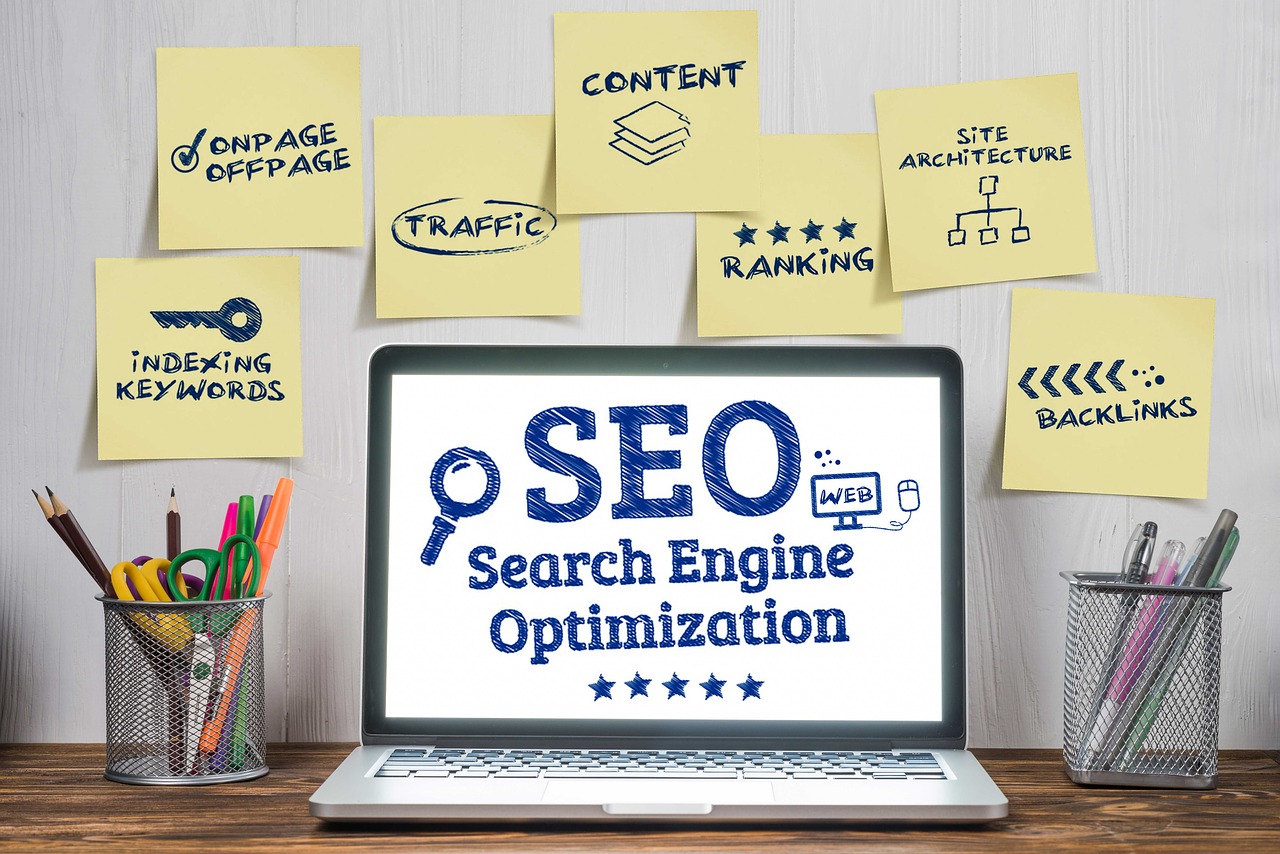
At the search engines’ level, it is all the pages that change, as if this was a brand new website. Therefore, how not to lose the work done on the SEO and make a successful transition, in particular if the website is old?

In the case of a rather old website with an optimal referencing on the existing domain name, transferring a website on a new name can ruin the time-consuming work that is the SEO. If the decrease of the traffic from organic search is normal (and temporary), some advises can help lessen the downturn, at least during the transition period.

Copy identically your website and implement 301 redirections

The first tip is to completely keep the website’s architecture, so that only the domain name changes in the URL.

Then, permanent redirections (301 redirections) must be created from each pages of the former website towards the corresponding page of the new website. Do not implement multiple redirections.

This process must be closely monitored to ensure that each 301 redirection is effective. The search engines will know that it’s not necessary to index the former name anymore but it’s the new one that must be indexed now. To ensure this, it is necessary to check that none of the former pages is accessible through the former domain name.

Have the backlinks updated

Google uses parameters linked to confidence indicators in its algorithm, thus to trusted websites, deemed as such by the search engine (indicators like the age of the website, the transparency of the legal notices, the ratio links number/words number per page, the links number pointing from other websites to this one, the extensions like .edu, .gov, the institutional websites, media websites, etc.) Hence, it can be interesting to quickly obtain the links from this kind of trusted websites at the time of the migration.

Along the same lines, reviewing your backlinks and requesting to the websites that refer to your website to update these links, so they link towards the new name, is an advantage. Of course, if you have many backlinks, concentrate on the more important backlinks regarding the referencing.

Inform Google

Lastly, it’s possible to directly inform Google of the changing through Google Search Console, the search engine will then update its index.

Register the sitemap

By submitting a sitemap file for the new website to the search engines, you will gain time in referencing by immediately giving to the engines the pages to index.

Keep the same holder for the new domain name

Make sure that the new domain name has the same proprietary information on its whois as the former domain name. Google may check these data.

Be patient

Do note that on Bing you will need an average of 2 months to get your referencing back, and about 6 to 7 months on Google.

The alarming Kaspersky report: nine times more attacks aiming connected objects than in 2018

The alarming Kaspersky report: nine times more attacks aiming connected objects than in 2018
Image source: TheDigitalArtist via Pixabay

Last October 15, Kaspersky, the antivirus software company, published an edifying report about the volume of cyberattacks directly aiming connected objects.

Although the industry expected that this new generation of objects would be directly targeted by cyberattacks, the increase in the cyberattacks number is alarming and lets easily imagine the security flaws that the connected objects present.

According to the estimation presented by Kaspersky, between the beginning of 2018 until mid-2019, the attacks would have reached the record of 105 million, i.e. nine times more than the previous year as a whole.

In order to conduct this research, Kaspersky used the trap technique by deploying more than 50 honeypots across the world. A Honeypot is a program that imitates the connected objects’ signature specifically created to attract cybercriminals. It was then possible to detect attacks from pirates that fell into the trap set for them. According to Kaspersky, during this experience, more than 20 000 sessions would have been infected every 15 minutes. 105 million attacks from 276 000 unique IP addresses have then been detected (compared to 12 million in 2018).

Furthermore, the report indicates that both in 2018 and 2019, China and Brazil are vying for the top position of the countries that served as the origin of the attacks launched.

The main malwares that use the security flaws of connected objects are well known (Mirai for example) and identified.

While we are aware that IoT is a privileged playground for pirates, the first security measures are far from being systematically applied. It’s essential for example to change the password installed by default for each connected devices’ purchase. For reminder, although technologies of cyber malice are indeed more and more sophisticated, the first gateway for pirates remains the users’ lack of vigilance.