Soon a maximum duration of one year for SSL certificates?

Soon a maximum duration of one year for SSL/TLS certificates?

What is happening?

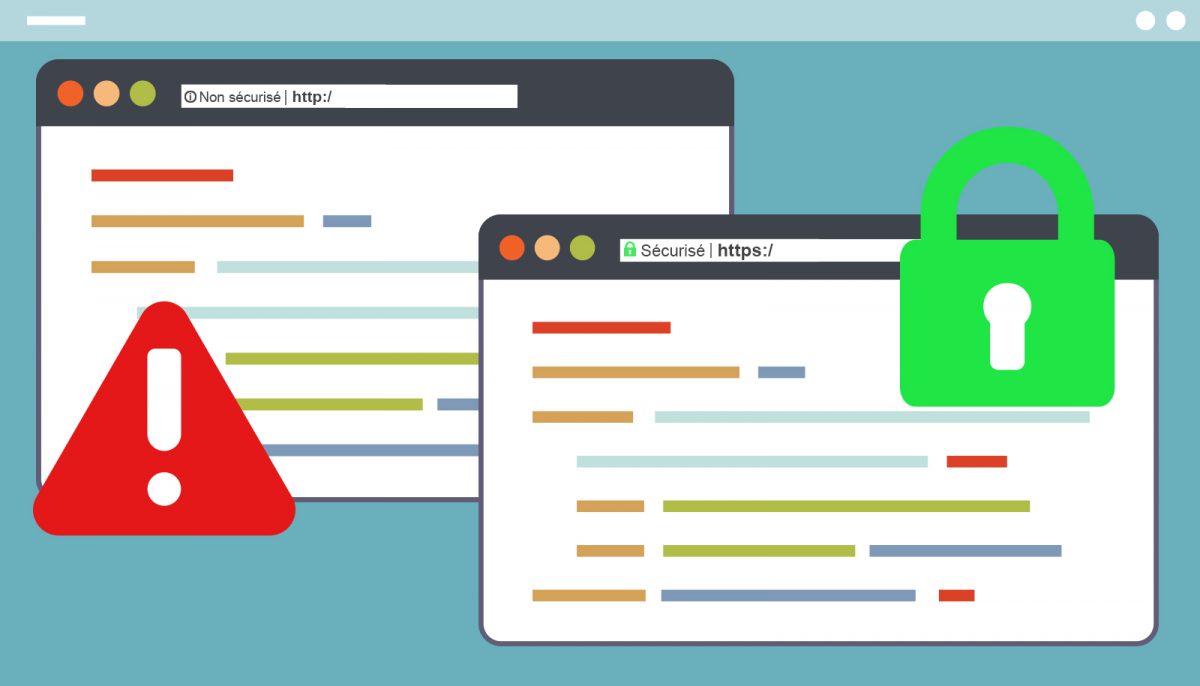
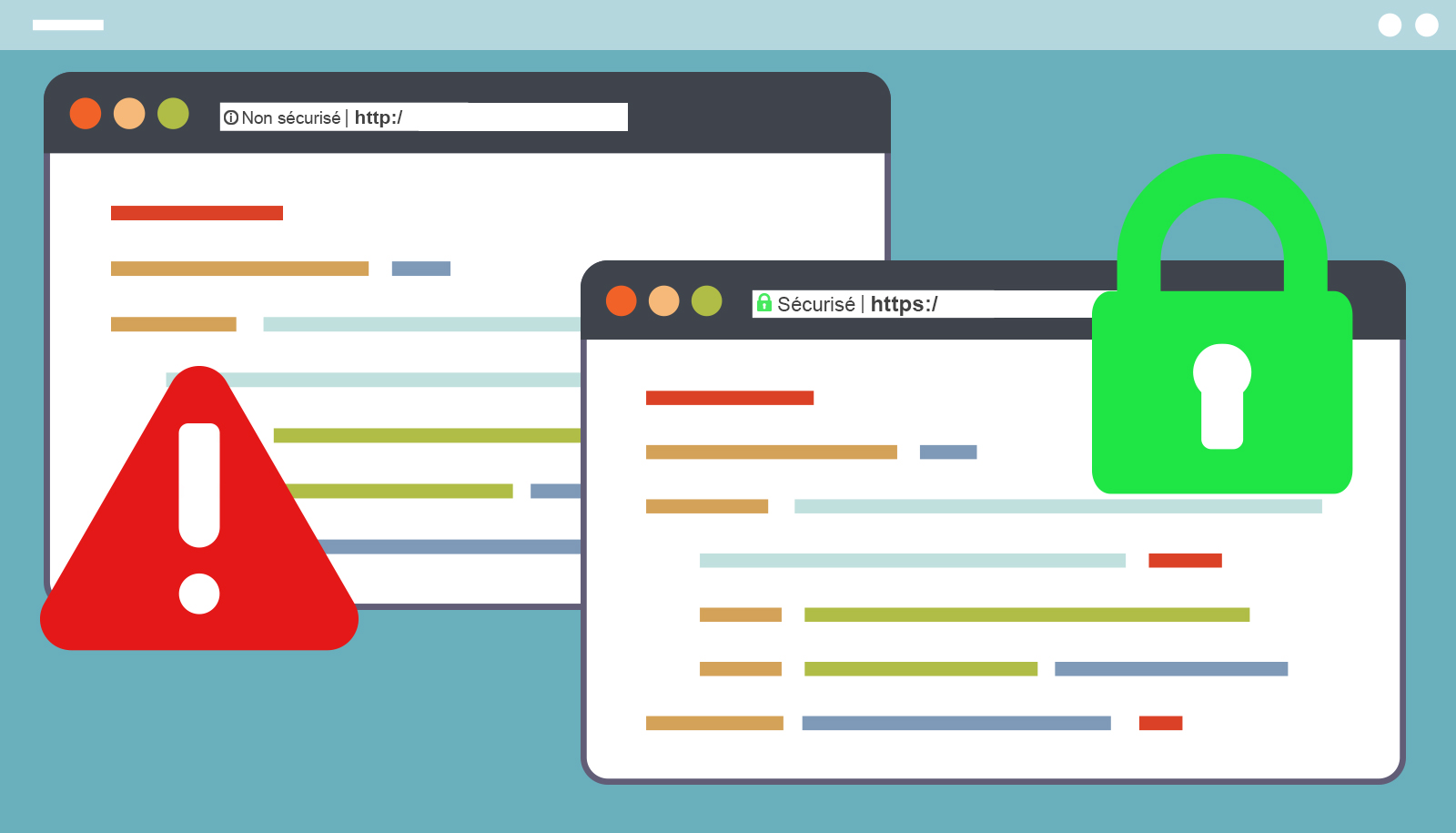
The industry actors plan to reduce the lifetime of SSL/TLS certificates, allowing the HTTPS display in browsers, to 13 months, i.e. almost half of the present lifetime of 27 months, in order to improve security.

Google through the CA/Browser Forum has indeed proposed this modification, approved by Apple and a Certification Authority, making it eligible to vote. During the next CA/B Forum meetings, if the vote is accepted, the modification of the requirements will come into effect in March 2020. Any certificate issued after the entry into force date will have to respect the requirements of the shortened validity period.

The aim for this reduction is to complicate things for cyber attackers by reducing the duration of the use of the potentially stolen certificates. It could also force companies to use the most recent and the most secured available encrypting algorithms.

If the vote fails, it’s not to be excluded that browsers supporting this requirement, unilaterally implement it in their root program, thus forcing the change to the Certification Authorities. It’s likely that this could be the case, this change follows Google’s precedent initiative that aimed to reduce the lifespan from three years to two years in 2018, period during which Google already wished to reduce it to 13 months or even less.

Who is impacted?

The changes proposed by Google would have an impact on all the users of TLS certificates of public trust, regardless of the Certification Authority that issued the certificate. If the vote passes, all certificates issued or reissued after March 2020 will have a maximum validity of 13 months. The companies using certificates with a validity period superior to 13 months will be encouraged to reconsider their systems and evaluate the impact of the proposed modifications on their implementation and their use.

The TLS certificates issued before March 2020 with a validity period superior to 13 months will stay operational. The public non-TLS certificate, for the code signing, the TLS private code and clients’ certificates, etc. are not concerned.  It will not be necessary to revoke an existing certificate following the implementation of the new standard. The reduction will have to be applied during the renewal.

What do the market players think about this?

It would be a global change for the industry with impacts on all the Certification Authorities. They view this proposition in a negative light. We can see an economic interest above all, but not solely…

The main argument is that the market is not ready in terms of automation system of orders and certificates implementations. Indeed, there would be more human interventions with the risks associated with poor handling, or simply a higher risk of forgetting a certificate renewal.

For Certification Authorities, reducing the certificates’ lifespan to such a short term mainly presents an increase of the human costs related to the certificate portfolio management. If they are not fundamentally against this decision, they would particularly like more time to study what users and companies think.

The position of browsers makers

Be it Google or Mozilla, the spearheads of the native HTTPS massive adoption for all websites and the supporters of the Let’sEncrypt initiative, what is important is the encrypting of all web traffic. A reduction of the certificates lifespan reduces the risk of certificates theft on a long period and encourages the massive adoption of automated management systems. For these two actors, an ideal world would have certificate of maximum 3 months. If they are attentive to the market as to not impose their views too quickly, it is more than likely that in the long term the certificates’ lifespan will continue to decrease.

Nameshield’s opinion 

The market continues its evolution towards shorter and shorter certificates’ validity, as a continual decrease of the authentication levels and consequently a need for management automated solutions that will increase. We will align on these requirements and advise our customers to prepare themselves for this reduction which will, without a doubt, arrive. Our Certification Authorities partners will also follow this evolution and will allow to provide all systems of required permanent inventory and automation.

To be heard

The CA/Browser Forum accepts comments of external participants and all discussions are public. You can directly enter your comments to the Forum distribution list:  https://cabforum.org/working-groups/ (at the bottom of the page). Nameshield is in contact with CA/Browser Forum participants and will inform you of the future decisions.


How to account and value a domain name?

The domain name is an integral intangible asset©

The domain name has this unique particularity to be an intangible asset with four dimensions.

It is simultaneously:

  1. An IT object allowing to access services on the Internet by doing the link between the IP address (a suite of numbers) of a physical object [computer, server, smartphone…] and a literal name (role of the Domain Name Server or DNS);
  2. A communication tool allowing to establish its identity on the Internet and gain a digital territory;
  3. A legal element through a temporary contract with an Internet Registry;
  4. A financial asset, accountable as an intangible asset under certain conditions.

Today an essential key element to any dematerialized data flow exchange, the domain name became overtime a strategic intangible asset of great value regarding associated services (email, websites access).

Accounting principles applicable to domain names

The domain name is not to be considered as a simple technical tool, but as an intangible asset to write in the balance sheet of the companies and collectivities, if it allows to generate a lasting source of profit. In a decision of the French Council of State of December 7th, 2016 (ebay.fr case), the wise persons of the Palais-Royal thus remind that if the use of a domain name:

  • Represents a constant source of profits;
  • Has a sufficient sustainability (particularly if it can be regularly renewed);
  • Is likely to be transferred;

Then it is an intangible asset of the company and must follow the associated accounting and tax rules. As such, the domain names have to be accounted either at their creation cost, or at their acquisition value, or at their current value (market value) for the ones acquired free of charge.

Which financial valuation methods to use?

Inspired by the ISO 10668 standard regarding the monetary valuation of the brands, Nameshield has developed a reliable scientific corpus by financing the CIFRE thesis of Mr. Clement GENTY (2016-2019), covering the subject: Internet governance and global economy: proposal of a valuation model of a domain name’s value as intangible asset. It is in this context that three approaches regarding the monetary valuation of domain names have been studied:

  • A historical costs approach;
  • A market approach (on semantics);
  • A loss approach (replacement cost).

The market approach aims to measure the semantic value of a domain name by reference to the monetary transactions passed. To that end, Nameshield has developed a database of more than 1.4 million transactions passed (domain name, price, year). This approach allows to give a price value by comparable.

The strength of a domain names’ valuation method, scientific and practical

Supported by its regular work in the acquisition and/or sale of domain names for its clients’ companies and collectivities, Nameshield is able to propose an approach of monetary valuation of a domain name or a domain names’ portfolio, as part of the best current scientific practice.

.AU domain names soon available for registration

.AU domain names soon available for registration
Image source: kitkatty007 via Pixabay

Until now, Australian domain names were only available for registrations in second level extensions, in particular .COM.AU.

If the decision to open the .AU registration goes back to 2015, it took four years to set the rules!

It seems that starting October 1st, 2019, the holder of the existing .com.au domain name, for example forexample.com.au, will be able to apply for priority status to register the exact match of their existing name in .AU, forexample.au.

The detail of the priority allocation system are below:

  • 2 priority status (from 2019/10/01 to 2020/04/01)

–Category 1 : Third level domain names (com.au, net.au, org.au, asn.au, id.au, edu.au, qld.edu.au, nsw.edu.au, eq.edu.au, act.edu.au, vic.edu.au, sa.edu.au, wa.edu.au, nt.edu.au, catholic.edu.au, schools.nsw.edu.au, education.tas.edu.au, sa.au, wa.au, nt.au, qld.au, nsw.au, vic.au, tas.au and act.au) registered on February 4th 2018 at the latest will be assigned to priority category 1 for the registration of the same name in .AU.

–Category 2: Third level domain names registered after February 4th 2018 will be assigned to priority category 2 for the registration of the same name in .AU.

  • The date of the general availability is not announced yet.

The registry indicates that more information will be published in the next weeks, we will keep you informed.

The new .AU licensing rules might also come into effect at the fourth quarter of 2019 (for all the extensions: .au, .com.au, .net.au, .org.au, .asn.au, .id.au).

Lastly, we can note that the general availability will allow the registration to individuals/companies which respect the Australian registry’s conditions (local presence in Australia).

For any questions, Nameshield’s teams are at your disposal.

Does the GDPR negatively affect enforcement efforts?

Does the GDPR negatively affect enforcement efforts?
Image source: mohamed_hassan via Pixabay

The General Data Protection Regulation (GDPR) has without a doubt a negative impact on the enforcement efforts, according to the participants at the INTA 2019 annual meeting (International Trademark Association) in Boston.

Margaret Lia Milam, domain name strategy and management lead at Facebook warned that the platform’s scale makes it a “huge target for bad actors”.

Milam stated that because the site is working at such a scale, it cannot turn to lawyers for the “thousands” of requests it receives.

Statton Hammock of MarkMonitor said that MarkMonitor had suffered a loss of efficiency of 12% due to the GDPR. His team has “historically used WHOIS to protect IP rights” but because of the GDPR, all the data they have cached “become less and less useful with each passing day”.

Alex Deacon, founder of Cole Valley Consulting, echoed Milam and Hammock’s comments warning that the Spamhaus Project, an international organization aiming to track emails spammers, is struggling to manage its blacklist because of the GDPR.

Voice.com domain name sold for $30 million

Voice.com domain name sold for $30 million
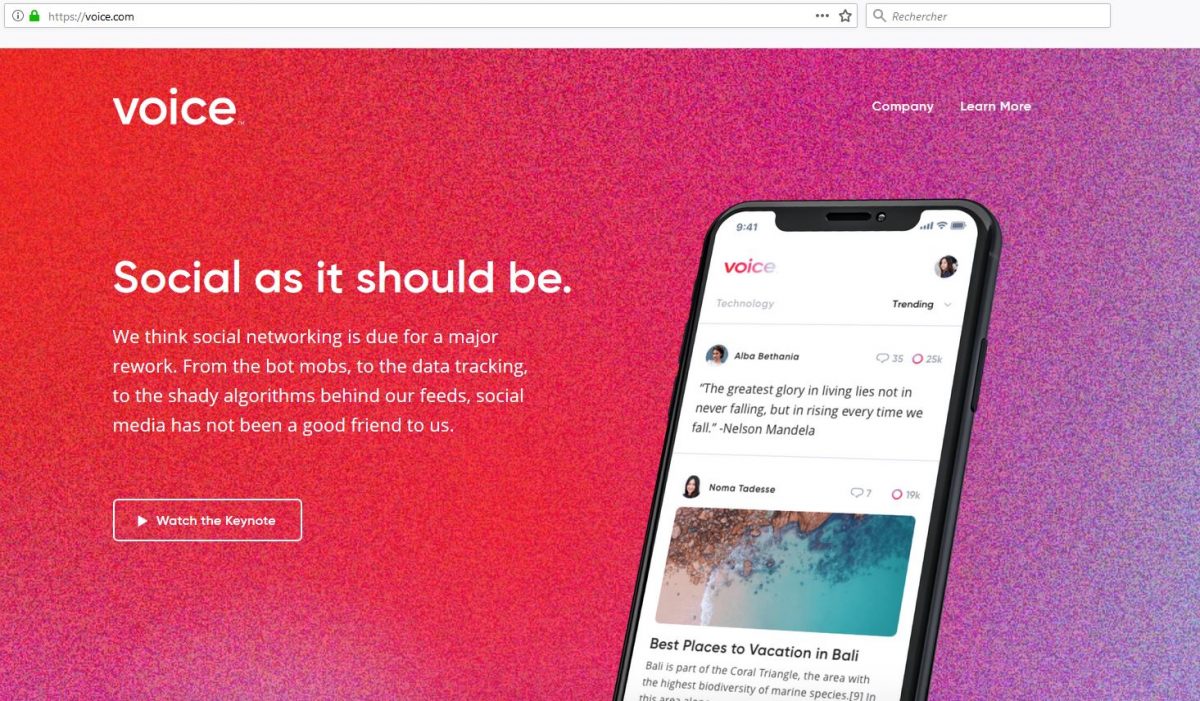
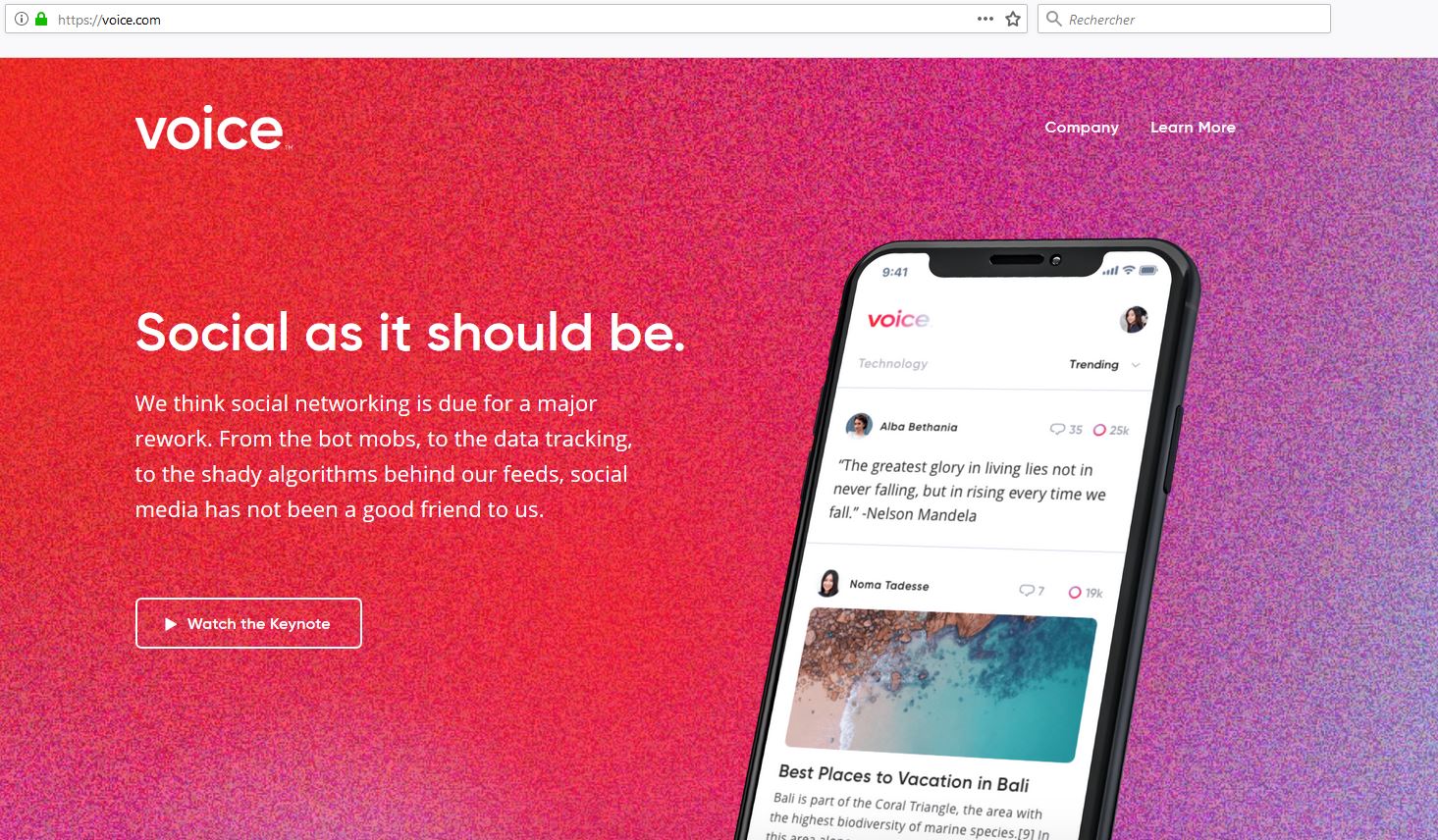
Voice.com website

Block.one (EOS), the startup behind the EOS cryptocurrency acquires the voice.com domain name for the amount of $30 million.

This is how the Chief Marketing Officer of MicroStrategy explains this acquiring at a high price: “Block.one has made a smart strategic decision in choosing Voice.com to be the internet domain name for its new social media platform. The word “voice” is simple and universally understood. It’s also ubiquitous ― as a search term […]. An ultra-premium domain name like Voice.com can help a company achieve instant brand recognition, ignite a business, and massively accelerate value creation”.

It places this sale in the top 5 of the biggest domain names’ sales:

Lasvegas.com $90 million in 2005.

CarInsurance.com $49.7 million in 2010.

Insurance.com $35.6 million in 2010.

PrivateJet.com $30.18 million in 2012.

Voice.com $30 million in 2019.

After having raised more than $4 billion through a fundraising in cryptocurrencies (ICO), the startup Block.one plans to use the domain name with the aim to compete with the social media platform Facebook.

The social media platform VOICE is opened since June, 1st 2019.

At a keynote, EOS’ CEO Brendan Blumer and Dan Larimer Block.one’s CTO, presented VOICE as an absolute alternative to everything that represents Facebook.

“Our content. Our data. Our attention. These are all incredibly valuable things. But right now, it’s the platform, not the user that reaps the reward. By design, they run by auctioning our information to advertisers, pocketing the profit, and flooding our feeds with hidden agendas dictated by the highest bidder. Voice changes that.”

In order to differentiate from Facebook, VOICE will function on the following basis:

  • VOICE will operate on EOS blockchain, which is upgrading to a faster version 2 for the occasion;
  • An anti-bot policy and other trolls will be implemented, without more details disclosed on the technology approach;
  • The blockchain will be public;
  • The arbiter of what must be seen or not, will not be the algorithm but the consensus;
  • Regarding security, a partnership with Yubico, makers of the Yubikey was announced. EOS seems to aim for an integration with WebAuthn, a standard for authentication without password recently approved by the W3C.

In other words, EOS wants to propose a model opposite to Facebook: the control by everyone of their personal data and their possible monetization.