COVID19.com – The domain name registered by a third party redirects to the website of the World Health Organization (WHO)

COVID19 domain name
Image source: geralt via Pixabay

“Domainers” are always a step ahead when it comes to taking advantage of a good or bad situation. For example, some will anticipate elections by registering the names of political figures, others by taking advantage of a sport or cultural event. Consequently, regarding domain names, there will be opportunities for speculative registrations.

In the case of “COVID19.com“, it seems clear that at the time of this domain name registration on February 11, 2020, the holder obviously wants to speculate on the “COVID 19” virus, a term that can generate multiple requests in any language. The name is available for sale for $10,000 USD.

However, instead of simply redirecting the domain name to commercial links, the holder chose to redirect this strategic name to the World Health Organization (WHO) website. Is this a citizen’s initiative? Unlikely, because given the current context, using such a name to make a direct profit through commercial links could lead to a violation of the Registrar’s registration conditions.

If the holder does not immediately benefit from this domain name, he will at least have the merit to draw our attention to him for the time of an article.

.ZA websites will have to propose a link towards the COVID-19 official website implemented by the government

South Africa - .ZA domain names - dot ZA
Image source: 12019 via Pixabay

Since last Thursday, the South African government has imposed to all websites using domain names in .ZA to propose a link that redirects towards the official Covid-19 information website implemented by the government:  www.sacoronavirus.co.za

This new rule applies to all .ZA websites, regardless of their content.

The two other extensions managed by ZADNA registry, JOBURG and .CAPETOWN are also affected by this rule.

In the same logic, the registry also invites Internet services providers to block any websites which spread fake news.

Lastly, it is interesting to note that the government’s COVID information website is not www.coronavirus.co.za but www.sacoronavirus.co.za. This is because the domain name www.coronavirus.co.za has been registered by a domainer who proposes on his website to resell the name in question.

Like all crisis or news, COVID-19 led to a massive registration of domain names containing the associated terms, some unscrupulous players seeking to take advantage of the situation.

Unsurprisingly, during this unprecedented and complicated period, there has been a high increase in the number of cybercriminal attacks of all kinds.

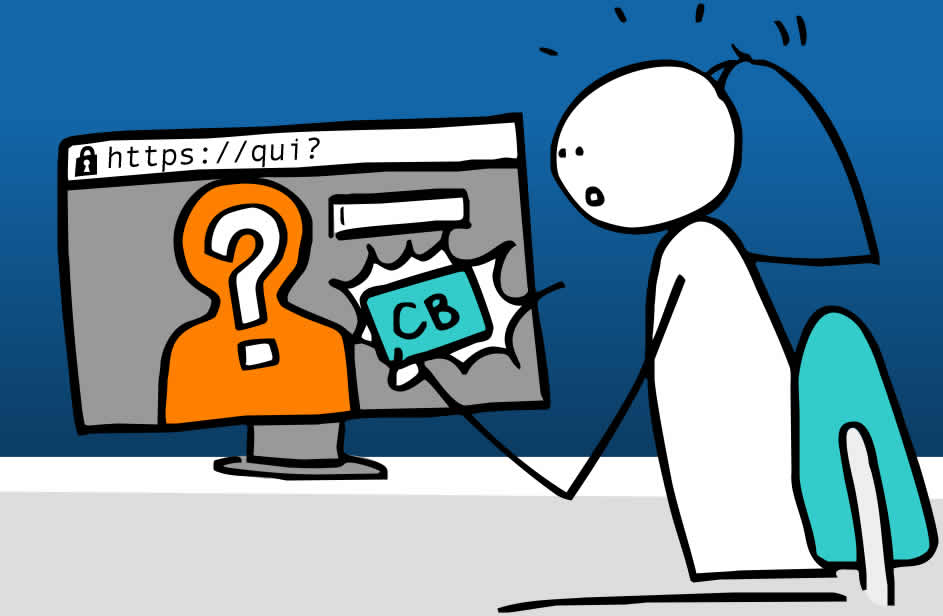
Let’s Encrypt, do not confuse confidentiality and security

Let’s Encrypt was recently the subject of discussions in the small world of TLS certificates, by suddenly revoking 3 048 289 certificates which should not have been issued. A bug in its validation software prevented CAA registrations controls, and the certificates in question should not have been initially issued. These significant disruptions resulted from this mass revocation, but it is difficult to complain about a free service.

I am often asked what I think of Let’s Encrypt, and I always have this same answer: Let’s Encrypt has done a lot to encrypt the web, but is undermining the security of the web. Encryption allows to ensure confidentiality (no one can spy on) and integrity (no one can modify) of exchanges. But encryption alone is not enough if I do not have any guarantee of the identity of the one I am exchanging with (legitimate or fraudulent?)… And that is the whole problem.

Let's Encrypt - SSL TLS certificates - Nameshield

In 2015, the Let’s Encrypt initiative supported by leading players of the Internet (EFF, Mozilla, Cisco, Akamaï…) was created with the purpose of massively and freely spreading SSL certificates to the whole world. More than five years later, the organization secures 190 million websites and has just announced that it has issued a billion certificates. The milestone was reached on February 27, 2020. This is undoubtedly a great performance.

96% of the web encrypted in January 2020

In 2015, less than half of the web traffic was encrypted, to reach 96% in January 2020. Of course, Let’s Encrypt is not the only player responsible for this rise. Edward Snowden launched the first alert, Google has largely stepped into the breach, between referencing policy and changes in web security indicators. But by providing to all, free certificates based on a largely automated system, Let’s Encrypt has democratized encryption… and put the concept of identity into oblivion.

No identity, no security

Let's Encrypt - SSL TLS certificates - Nameshield

Let’s Encrypt’s credo is simplicity, to “simplify to the extreme HTTPS deployment and put an end to its horribly complex bureaucracy” (says EFF in the launch campaign). The horribly complex bureaucracy has however a meaning: high authentication, which guarantees the identity of the certificate’s holder. Maybe not the absolute guarantee of legitimacy, not a guarantee of content either, but the guarantee of a registered company, legitimately owner of the concerned domain name and with a certificate validated according to a drastic procedure.

Let’s encrypt merely verifies the domain name’s control (DV, Domain Validation). One only has to click on a link in an email or to fill in a TXT record on the domain name’s DNS zone. Yet domain names registration in most TLDs is purely declarative. It is quite easy to register a domain name, to request a certificate from Let’s Encrypt and to publish a website in HTTPS://.

The results?

In five years, all phishing and fraudulent websites have switched to HTTPS://. Since 2016, Vincent Lynch alerted on this problem, 15 270 certificates with the term “Paypal” had been issued by Let’s Encrypt, 14 766 of these certificates were fraudulent.

The market has been brought down in terms of authentication level. Let’s Encrypt is far from being the only one responsible, Google and Mozilla, with their 70% of market shares, have largely supported the initiative, the big Cloud hosting providers followed, as well as the Certification Authorities, challenged on the prices. Today we have a secure web with 77% (November 2019) of certificates whose proprietary’s legitimacy is not verified.

High authentication changes the game

The web has become encrypted by default. Does that make it more secure? Nothing is certain. The web user educated for twenty years to check the presence of the padlock in the address bar, trusts a web where all the fraudulent websites display the security padlock. Today, Internet is confidential but that does not make it safe.

It is urgent to return to high authentication. High authentication ensures a set of compulsory, drastic and controlled steps in order to obtain certificates. The procedures are enacted by CA/B Forum, regularly strengthened, and followed by audit from Certification Authorities.

23% of the certificates are still issued on the basis of high authentication, mostly in the corporate world, where CISO are pushing to preserve it. We all have to rely on them and support initiatives supporting OV (Organization Validation) and EV (Extended Validation) certificates, especially EV to guarantee the identity of the websites visited by web users. While identity on the Internet seems to have been somewhat forgotten for some time in favor of confidentiality, it is likely to come back to the spotlight again soon, driven in particular by web users and the need of personal data protection.


Nameshield renews its ISO 27001 certification

ISO 27001 - Nameshield renews its ISO 27001 certification

Nameshield Group is an expert in domain names, DNS, TLS/SSL certificates management.

Through our experience gained from world-renowned customers with ever-increasing security requirements, we have also become technical experts in Information security. That is why we have implemented an Information Security Management System (ISMS).

In 2017, we obtained the ISO 27001 certification of this ISMS for our activities of domain names portfolio, DNS and TLS/SSL certificates management. Nameshield Group has thus become the sole French registrar ensuring such a level of security for its customers.

Since then, our employees involved in the ISMS continuously contribute to the constant improvement of our security arrangements.

An analysis of the risks and their processing, according to the Ebios method, answer to our security goals and those of our clients.

We permanently adapt to security, performance and sustainability needs. It results in the deployment of more secure products and services, with higher added values, that meet our clients’ expectations more and better.

We know how to mobilize ourselves in case of incidents and learn to always do better by analyzing the processing of each alert.

We have and control a business continuity plan. Therefore, we are able to carry out our activities remotely (backup site, telecommuting, redundant servers…), whatever the threats.

Information security is the DNA of Nameshield Group and all its employees.

Logically, our ISO 27001 certificate has been renewed for 3 years in last February without any non-compliance nor comments being notified.

This international recognition ensures you:

  • An availability rate (domain names management platform and DNS Premium)
  • Tests implementation allowing us to permanently review ourselves and anticipate incidents
  • The raising awareness of all Nameshield employees to all Information security aspects
  • The reliability and performance of our system
  • The study of our experience feedbacks to continuously improve our security and thus yours

.ORG news – NGOs against the .ORG registry’s sale to Ethos Capital

Sale of .ORG registry - PIR Public Interest Registry - dot ORG - Nameshield

At the end of 2019, the announcement of the .org registry’s sale, Public Interest Registry (PIR) by Internet Society to Ethos Capital, a private equity firm, created a debate, which was also the subject of a previous article on this blog.

For reminder, this announcement caused several concerns from NGOs, such as the increase of .ORG prices and the implementation of rights protection policies that could lead to a form of censorship, as is already the practice in some countries. These fears led Electronic Frontier Foundation (EFF) to launch the SaveDotOrg campaign to raise awareness about the potential impact of this sale. To date, 846 organizations and 25 119 people have signed this petition demanding Internet Society to stop the sale.

In front of these many complaints, ICANN postponed the approval of the .ORG registry’s sale to Ethos Capital and requested additional information from Internet Society.

« Public Interest Commitments »: The measures proposed to address the .ORG community’s concerns

In response to these criticisms, Ethos Capital and Public Interest Registry try to reassure by proposing the implementation of “Public Interest Commitments” (PIC), binding commitments which would ensure that the .org prices’ increase would be limited.

Among these commitments, they also propose the creation of a “Stewardship Council” (a council for the .org management) which could influence decisions taken by PIR and thus ensure the preservation of freedom of expression.

These PIC would be added to the Registry Agreement, the contract between the registry and ICANN regarding the functioning of the registry.

A for-profit registry to defend non-profit organizations?

During the last ICANN summit, organized remotely from 7 to 12 March 2020 because of the Covid-19 pandemic, several NGOs, including EFF, mentioned this .ORG registry’s acquisition by Ethos Capital and asked ICANN about how it plans to review the change of control of the .ORG registry.

According to EFF, forming a “Stewardship Council” will not resolve the NGOs’ concerns. Indeed, the initial members of this council will directly or indirectly be selected by PIR and PIR will have the ability to veto new council members, which would thus ensure that the council will stay in lockstep with PIR.

Regarding the .ORG prices, according to NGOs, the implementation of the PIC doesn’t ensure a limitation of the prices increase. An amending of the Registry agreement can be negotiated at any time by the registry’s owner and ICANN, despite a public opposition. That’s what happened in June 2019, when the .ORG Registry Agreement was revised to diminish registrants’ rights and remove price caps. Furthermore, ICANN indicated in 2019, its interest in exiting the role of price regulation, but the PIC implementation would place ICANN back into that role.

Therefore, according to NGOs, these “Public Interest Commitments” would not protect adequately the .org community.

The NGOs’ questions remained without answer during the last ICANN summit, and this acquisition is still under review by ICANN.

“We acknowledge the questions and concerns that are being raised” says ICANN. “To ease those concerns and maintain trust in the .ORG community, we urge PIR, ISOC, and Ethos Capital to act in an open and transparent manner throughout this process. […] We will thoughtfully and thoroughly evaluate the proposed acquisition to ensure that the .ORG registry remains secure, reliable, and stable.”

To be continued.