DNS – the big forgotten of Internet

“DNS continues to be one of the most targeted Internet services, and it remains the Achilles heel of global Internet infrastructure. DNS was not only the most heavily abused protocol for reflection/amplification DDoS attacks this year, but an attack targeting a specific DNS provider was also the cause of the most widespread Internet outage of 2016 (Note: attack on the provider Dyn, which caused for about ten hours, the inaccessibility of a big part of Internet in the USA, particularly impacting Twitter, Ebay, Netflix, Amazon, Paypal… in October 2016).”

Arbor Network Infrastructure Security Report – June 2017

But what is the DNS?
DNS – the big forgotten of Internet

Because the human being is more apt to remember a name than a number, and because this is even more true for going on a website, between a domain name and an IP address, the human being, in order to simplify their life, have created the DNS: Domain Name System (or service).

For example: “I want to go on Google.com, my browser will ask the DNS what the IP address of the web server hosting google.com is, it will obtain it, then go on it and download the page.”

The DNS is a public database, decentralized and distributed, which associates domain names to IP addresses. It exists since 1985. It’s a part we can qualify as Internet infrastructure, essential to operate… and yet the DNS is invisible to the user.

The DNS has been massively adopted because it’s practical. It simplifies the user’s life and allows them to easily identify, differentiate, locate, memorize and transmit the domain name of a website associated to a brand. It has also been adopted on the other side of the mirror by its networks administrators to identify and differentiate servers, it is even more true with IPv6, with hosts multiplication and the arrival of the all connected. The DNS allows them, last but not least, to have the possibility to change servers and IP addresses in all transparency for the web user.

The DNS is omnipresent within the Internet. Everyone should be able to have access to it, if not, the Web would not operate anymore. This is what has happened in 2016 to our American compatriots, who had to do without Twitter or frenetically buying during almost 10 hours. The lost profit regarding revenue and impact on the brand image of the impacted companies have been significant.

But as it is invisible, everyone tends to forget it… and to realize it when it’s too late.

Strategic services relying on the DNS and the associated risks

Websites and email are two major services which systematically rely on DNS. Imagine that your website is unavailable for 1 minute, 10 minutes, 1 hour… and the consequences for your company, revenue, service discontinuity, image of the brand, customer’s loss. And what the consequences are for the absence of emails on this same period…

If these two services are the most potentially impacted, others can systematically rely on DNS:

VPN, VOIP, instant messenger… with the consequences smaller but equally regrettable for the operating of the company.

Attacks on DNS

Sadly, DNS servers are exposed to many potential attacks:

– Cache poisoning: make the DNS servers believe they receive a valid answer to their request while it is fraudulent. Once the DNS poisoned, the information in cache makes all the users vulnerable (send to a fake website).

– Man in the middle: The attacker alters the DNS server(s) of the parts in order to redirect their communication to them without the parts realizing it.

– DNS spoofing: redirect the web users without them knowing, towards hacked websites.

– DDoS: DNS are more and more targeted by DDoS attacks, in order to saturate them and prevent them to ensure the resolution of the company’s key services.

And all these attacks have the same consequences: hijack or stop the companies ‘traffic.

The big forgotten

From the user’s point of view, the DNS doesn’t exist, they use the naming system of domain names to navigate and send emails, they have only one need: that it works.

From the company’s side, the problem is different, it is usually a lack of information, a lack of conscience of the DNS importance and the consequences of a service breakdown.

In most of the cases, companies do not really pay attention. They will use an important budget to register and manage domain names, to rise their visibility and protect their brands, but will not linger on DNS servers’ strength at their disposal from their provider.

The good practices to implement: having first rate DNS infrastructure
DNS the big forgotten - DNS availability time

First of all, consider whether your strategic domain names already beneficiate from a particular attention from the DNS infrastructure. Are called strategic, all domain names on which rely the key services traffic of the company: web sites, email, VPN, instant messenger…

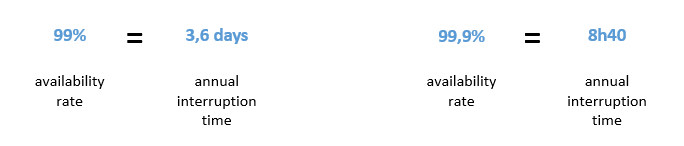
To gain its own DNS infrastructure is a solution which presents advantages of flexibility and control, but the acquisition cost, management and maintaining on one side, complexity and necessary knowledge on the other, are often crippling or badly evaluated. It’s usually easier to go for an extern DNS infrastructure, managed by a registrar, host or specialized provider. It is then appropriate to check which availability annual rate is ensured and how it relies on the good practice for a maximum availability.

To ensure a high availability to your Internet services, it’s essential to choose a DNS solution highly available which offers:

– Necessarily functionalities to a DNS intensive use;

– A network of anycast type to reduce the DNS resolution time and ensure an optimal access time to your websites.

– A DNS infrastructure secured and staying available even in case of attack.

– Key functionalities like : GeoIP, Failover, Registry lock, DNSSEC, anti-DDoS smart filter

Conclusion

The DNS is not visible but is everywhere, it ensures the access to our key services thanks to the resolution of your strategic domain names, it is potentially exposed to many attacks with disastrous consequences and it lacks too often attention from companies. So.. Don’t forget about it and if necessary, talk about it with your Nameshield partner.


Referendum in Catalonia

Referendum in Catalonia

Context:

Spain, divided in 17 autonomous communities can’t be compared to the administrative division of the regions. Indeed, these Spanish communities don’t have the same autonomy and Catalonia, located in the North East, benefits from an autonomous status, in effect since 2006.

Issue of October 1st

Last Sunday, the Catalan independent regional government organized a referendum concerning Catalonia independence among 7.5 million residents. This initiative has been quite badly perceived by the Spanish conservative government, which searches by any means to slow down if not stop the movement. For many media, this is one of the worst political crisis of the last 40 years.

Like many territories or regions, Catalonia benefits from its own TLD: .CAT.

In France, Brittany, Corsica, Alsace and Paris also benefit from a dedicated extension, i.e. respectively .BZH, .CORSICA, .ALSACE and .PARIS.

Beside France, we can find .SCOT for Scotland, .EUS for Basque culture, .FRL for Friesland, etc.

June, 9th 2017

The referendum on Catalonia’s independence is announced. It will take place on October 1st. The question that the voters will have to respond to is the following: “Do you want Catalonia to be an independent state in the form of a Republic?”

September 13th 2017

Spanish law enforcement officers seize the electoral equipment.

September 15th 2017

Madrid, judging Catalan referendum illegal, raided the registry managing .CAT, PunCat in order to make unavailable the access to websites in favor of independence, the hosting of these latter being abroad. The registries of the other countries expressed dissatisfaction for this situation: .EUS and .SCOT have thus communicated on this subject. To this day, if we can note the reactions of EFF and ISOC, neither the GeoTLD Group nor ICANN have communicated yet on this matter. The issue having been covered beyond borders, we can note an article of NYT on this subject, it would seem natural that a first release from ICANN would soon be published.

PuntCat, .CAT registry, communicated with words on this incident and asked help from ICANN: « The show that we have experienced in our offices this morning has been shameful and degrading, unworthy of a civilized country. We feel helpless in the face of these immensely disproportionate facts».

September 20th, 2017

“Anubis operation” launch, aiming to prevent the referendum.

September 24th, 2017

Catalonia’s secretariat of telecommunications complains to the European Commission about the blocking of some websites in .CAT and the raid of the Catalan registry.

September 25th, 2017

With the impossibility to cut pro-independence websites, Spanish government blocks them.

October 1st, 2017

The vote takes place. 90% of YES for independence, 42% of participation rate.

October 4th, 2017

Day of this article’s publication, Catalan government should announce the Catalonia independence.


Acquisition of Rightside by Donuts: What are the consequences on DPML Programs?

Acquisition of Rightside by Donuts: What are the consequences on DPML Programs?

At the Internet new extensions launch, Donuts operator, the biggest extensions applicant (.services, .legal, .photos, .vin etc.) has launched a specific protection program in addition to the TMCH.

The Donuts Protected Mark List (DPML) allows to block the registration by a third party of a domain name similar to the brand under all the extensions managed by the registry.

For example, if the brand “iPhone” is registered in the TMCH (prerequisite) then in the DPML, no one can register <iphone.photos> or <iphone.services>, as well as the other hundred Donuts extensions.

Other registries have also created protection programs, in common with Donuts’ DPML, on more restricted perimeters. It was the case of Rightside which managed the following 40 extensions:

.ACTOR

.AIRFORCE

.ARMY

.ATTORNEY

.AUCTION

.BAND

.CONSULTING

.DANCE

.DEGREE

.DEMOCRAT

.DENTIST

.ENGINEER

.FAMILY

.FORSALE

.FUTBOL

.GAMES

.GIVES

.HAUS

.IMMOBILIEN

.KAUFEN

.LAWYER

.LIVE

.MARKET

.MODA

.MORTGAGE

.NAVY

.NEWS

.NINJA

.PUB

.REHAB

.REPUBLICAN

.REVIEWS

.RIP

.ROCKS

.SALE

.SOCIAL

.SOFTWARE

.STUDIO

.VET

.VIDEO

At the end of July, Donuts announced the acquisition of Rightside.

What are the impacts of this acquisition on the holders of these two protection programs?

  • The DPML now integrates the extensions of Rightside, without supplementary cost.
  • It’s not possible to only subscribe to Rightside’s program anymore, you will have to necessarily turn to Donuts’ DPML.
  • It will not protect the names previously registered by third parties.
  • It excludes premium domain names.

If you want to register your brand in the TMCH and/or in the DPML, don’t hesitate to contact your interlocutor at Nameshield.


Irma storm and its unexpected consequences on the domain names industry

Irma storm and its unexpected consequences on the domain names industry

.TV means television, .FM, FM radio, .IO tech companies…

Actually no. In fact, yes but no. These codes do not designate sectors of activity but territories according to ISO 3166-1 alpha 2:

  • TV is for Tuvalu, a Polynesian state;
  • FM is for Federated States of Micronesia ;
  • IO for British Indian Ocean Territory.

Why such a mix of genres? In fact, domain names and geopolitics make a whole.

When you communicate with a .COM domain name, you trust Verisign, an American company. With a .FR, it’s the AFNIC! For the .TV, nothing to fear, this extension is technically delegated to Verisign. And for the .IO, it will be said that the infrastructure is fairly resilient. Why mention this reality?

Simply because geopolitics are moving, political events have frequently cut off domain name extensions. This is the case of .LY, which corresponds to Libya. For example, South-West professionals communicating in .SO met some technical problems when Somalia has cut its DNS infrastructure for some time.

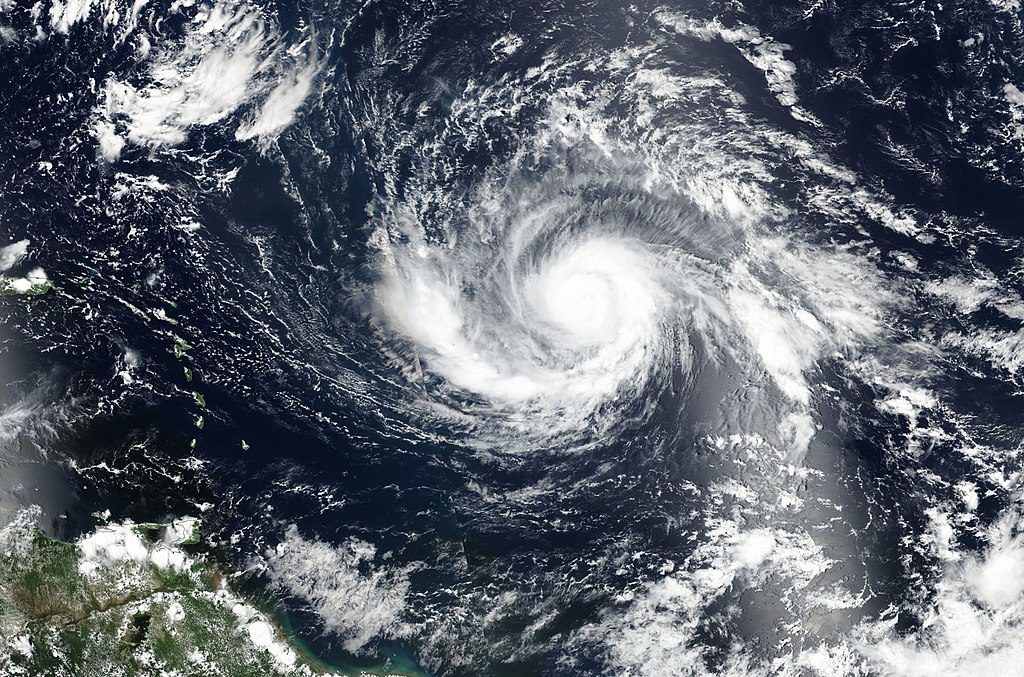
Precisely, that’s what happens with the .AI. AI for Artificial Intelligence? Not at all, it is the country code of Anguilla, a territory heavily affected by Irma Hurricane. Thus, many companies using .AI domain names have encountered difficulties in registering, managing or renewing their domain names.

But then, how do we do? This is precisely what is exciting in this intangible industry: if no guide is available to track real-time geopolitical movements and the consequences on registries’ DNS availability, Nameshield informs you in real time.

Do not hesitate to contact us if you have any questions.

.BRAND : 4 episodes, for this summer

.BRAND : 4 episodes, for this summer
Photo : CC BY-SA 3.0 Nick Youngson – source : http://nyphotographic.com/

Act 4: Reconstruction

While a myriad of new extensions were open for recording, the time was to select .COM, .CM, .OM, .CO or .CAM records? .FR or .FRL?

The decision to make registrations in all new extensions of course has a high cost and is no longer necessarily wise.

This is also why, some brands have chosen a .BRAND: its own TLD, its own sovereignty, its own management rules! Many brands have opted for this configuration and we can see now the blooming of .BNPPARIBAS, .ALSTOM, .SNCF, .LECLERC, .GOOGLE …

This reflection on .BRAND has sometimes been badly conducted: some brands have now abandoned their own TLDs, such as McDonald’s. ICANN has a list of these TLDs, along with the very formal letters from the companies asking to remove the area of ​​confidence, historically so costly. It reminds me of The Fallen Astronaut. We can say that the abandonment of these TLDs will be used for others to build themselves up. A good general uses the strength of the enemy as Sun Tzu said!

These discontinuations show that the companies concerned have not seen today the benefits they could make from the costs associated with the creation and management of a .BRAND. Others, more daring, have discovered the interest and / or imagine discovering new service opportunities allowing them to have an increased or even total control over their infrastructure to come with high stakes, Internet of Things, Industry 4.0 …

Let’s wait for the first connected objects and the deployment of a real infrastructure around a resilient .BRAND and we’ll see!

Read act 1: Denial (and Anger)

Read act 2: Expression

Read act 3: Depression