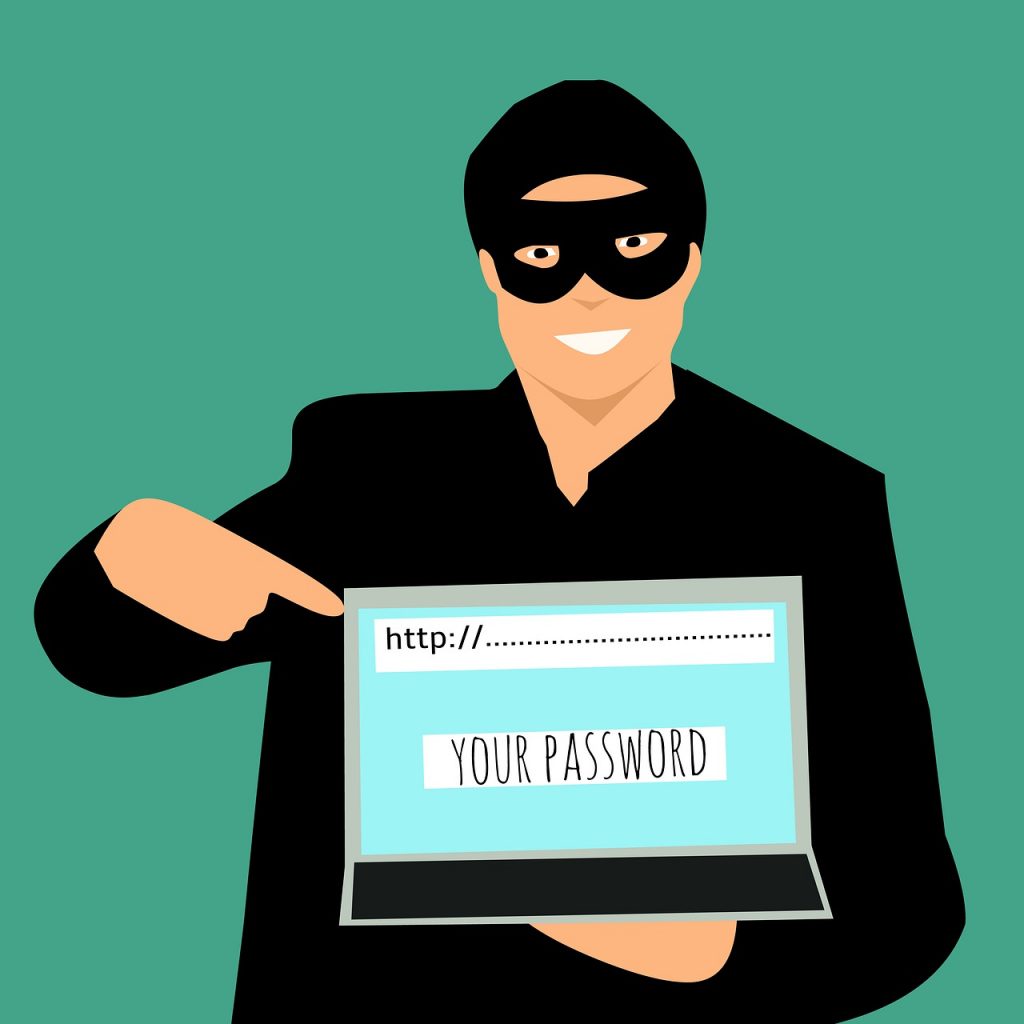
Phishing-as-a-Service (PhaaS) is a fast-growing phenomenon in the cyberthreats world, getting armed with tools that make it more and more prosperous.
It has opened up the online fraud market to the masses, to the point that phishing attempts have become a daily plague.
Find in this new “5 minutes to understand” document, available for download on the Nameshield’s website, how phishing is now sold in ready-to-use kit and how to protect against it.
Important: information relating to the situation in Russia, Belarus and Ukraine.
In response to the evolving geopolitical situation in Ukraine, many SSL certification authorities are suspending the issuance and reissuance of all types of certificates affiliated with Russia and Belarus.
This includes suspending issuance and reissuance of certificates to TLDs related to Russia and Belarus, including .ru, .su, .by, .рф, as well as to organizations with addresses in Russia or Belarus. We will keep you informed as soon as the situation returns to normal.
Also, we observe a significant increase in phishing attacks. We advise you to be extra vigilant, especially when it comes to new domain name registrations using your trademarks.
Nameshield remains of course at your disposal to accompany and advise you in this complex context.
On last May 10th, in a press release, the Pacers Sports & Entertainment (PSE) organization, owner of the NBA’s basketball team the Indiana Pacers, revealed that they were the victim of a sophisticated phishing attack at the end of 2018.
For reminder, phishing is a technique used to obtain personal information in order to commit an identity theft. This is a «social engineering» technique, i.e. consisting in exploiting not an IT flaw but a «human flaw» by deceiving web users through an e-mail seemingly coming from a trustworthy company, typically a bank or a business website.
Pacers Sports & Entertainment victim of a phishing attack
At the end of 2018, the company PSE has then been the target of a phishing emails campaign resulting in the unauthorized access to emails containing personal information related to a limited number of individuals.
This cyberattack affected a limited number of
individuals but the amount of the stolen information is important: name,
address, date of birth, passport number, driver’s license, state identification
number, account number, credit/debit card number, digital signature, username
and password and for some individuals, the Social Security number.
The American company has quickly implemented
measures to secure the affected email accounts and investigate the incident
with the assistance of forensic experts. This investigation then revealed that
the hackers had access to the accounts of a limited number of persons between
October 15th and December 4th, 2018. The press release
doesn’t give any details regarding the identity of the targeted persons.
PSE individually notified each victim whose
information has been stolen and assures that “to date, PSE has no evidence of
actual or attempted misuse of any personal information”. The organization offered
to the victims of the cyberattack an access to credit monitoring and identity
protection services at no cost.
Some simple rules against phishing
Phishing attacks are increasing. Above all, they are becoming more and more sophisticated, and target all kinds of industries. Each and every one of us must be extra vigilant.
Lastly, for reminder, here are some simple rules to protect yourself against phishing attempts:
Do
not reply when someone asks for your personal data by email;
Do
not ever open an attachment from an unknown sender, or from one who is not
entirely trustworthy;
Check
the links by hovering the cursor over them (without clicking) to ensure that
they link to trustworthy websites;
Do
not trust the name of the mail’s sender. If there is any doubt, contact the
sender through another method.
As with each event where massive interest is
expected, the launch of the final season of Game of Thrones is a golden
opportunity for pirates.
According to a Kaspersky’ study, this series would be the favorite of the cybercriminals. It represented 17% of the infected contents last year, i.e. 20 934 web users! According to this same study, the most targeted episodes are logically the first and last episodes of the season.
For if the fans are many in France, without
subscription, the only solution to watch the so awaited episodes is illegal
downloading on torrent websites.
It is through this means that the
cybercriminals infect the unsuspecting web users’ computers. First warning, do
not install programs at the request of the torrent websites, they can contain a
malware!
Indeed, two kinds of
frauds are principally used:
Malwares: the malicious software are launched on
torrent websites used by the fans of the series to access to the watching of
the precious episodes.
Phishing: many phishing attempts have been counted, the
pirates use the official image of Game of Thrones to try to retrieves your
personal data.
This season, the cybercriminals are almost as
creative as the scriptwriters of the successful series: many and various fake
contests allow these hackers to collect email addresses and other bank details.
Counterfeiting is also in the game, with an
observed increase of websites proposing many so-called “official” products but
being nothing more than counterfeits.
Thus, Nameshield
recommends to the fans to be highly vigilant!
For reminder, here are the basic principles to
respect in order to serenely navigate and not be trapped by unscrupulous
hackers:
Do
not download any plugin of suspicious origin
Properly
analyze the URLs before any purchase
Check
the presence of the famous HTTPS
Check
that the final address corresponds to the searched website
As always on the web, an extra vigilance is
needed, because if spring wins our regions, don’t forget that on the web,
winter is coming…
Phishing is cybercriminals’ means of choice to hijack users‘ data, posing as a trusty company and then encouraging them to deliver personal information. We are often more inclined to think that this technique is reserved to hackers who try to steal banking or very sensitive information, and yet!
Source : mohamed_hassan via Pixabay
An American student of Ygnacio Valley High School, in California, had a great time reproducing identically the website on which his teachers connect to enter marks and comments. This same student then emailed his teachers to connect to the fake school’s interface, which looked exactly the same as the original one. Thus, he could retrieve their login ID and passwords, and used them in order to raise his grades but also to lower his classmates’ grades.
Arrested by the police, the student said that what he had done was “as easy as stealing a candy from a baby”. Expelled from school, he was identified thanks to his computer IP address.
Quite light in consequence, this data corruption attempt highlights the simplicity of access to this hacking means. Today, phishing is one of the most popular methods and the easiest to implement. Web users, while unaware and fooled by similarities, consequently provide personal, sometimes very sensitive data.
Nameshield uses cookies
Nameshield wishes to use cookies to ensure the proper functioning of the site and, with our partners, to measure its audience🍪.
Nameshield wishes to use cookies to ensure the proper performance of the website and, with our partners, to monitor its audience. More information in our Cookie Policy 🍪.
Necessary cookies are absolutely essential for the website to function properly. These cookies ensure basic functionalities and security features of the website, anonymously.
Cookie
Duration
Description
cookielawinfo-checkbox-advertisement
1 year
Set by the GDPR Cookie Consent plugin, this cookie is used to record the user consent for the cookies in the "Advertisement" category .
cookielawinfo-checkbox-analytics
11 months
This cookie is set by GDPR Cookie Consent plugin. The cookie is used to store the user consent for the cookies in the category "Analytics".
cookielawinfo-checkbox-functional
11 months
The cookie is set by GDPR cookie consent to record the user consent for the cookies in the category "Functional".
cookielawinfo-checkbox-necessary
11 months
This cookie is set by GDPR Cookie Consent plugin. The cookies is used to store the user consent for the cookies in the category "Necessary".
cookielawinfo-checkbox-others
11 months
This cookie is set by GDPR Cookie Consent plugin. The cookie is used to store the user consent for the cookies in the category "Other.
cookielawinfo-checkbox-performance
11 months
This cookie is set by GDPR Cookie Consent plugin. The cookie is used to store the user consent for the cookies in the category "Performance".
CookieLawInfoConsent
1 year
Records the default button state of the corresponding category & the status of CCPA. It works only in coordination with the primary cookie.
viewed_cookie_policy
11 months
The cookie is set by the GDPR Cookie Consent plugin and is used to store whether or not user has consented to the use of cookies. It does not store any personal data.
Functional cookies help to perform certain functionalities like sharing the content of the website on social media platforms, collect feedbacks, and other third-party features.
Performance cookies are used to understand and analyze the key performance indexes of the website which helps in delivering a better user experience for the visitors.
Analytical cookies are used to understand how visitors interact with the website. These cookies help provide information on metrics the number of visitors, bounce rate, traffic source, etc.
Cookie
Duration
Description
_ga
2 years
The _ga cookie, installed by Google Analytics, calculates visitor, session and campaign data and also keeps track of site usage for the site's analytics report. The cookie stores information anonymously and assigns a randomly generated number to recognize unique visitors.
_gat_gtag_UA_25904574_14
1 minute
Set by Google to distinguish users.
_gid
1 day
Installed by Google Analytics, _gid cookie stores information on how visitors use a website, while also creating an analytics report of the website's performance. Some of the data that are collected include the number of visitors, their source, and the pages they visit anonymously.
Advertisement cookies are used to provide visitors with relevant ads and marketing campaigns. These cookies track visitors across websites and collect information to provide customized ads.
Cookie
Duration
Description
NID
6 months
NID cookie, set by Google, is used for advertising purposes; to limit the number of times the user sees an ad, to mute unwanted ads, and to measure the effectiveness of ads.