Google makes HTTPS encryption mandatory for its 45 new TLDs : .dev / .app / .how…

Google makes HTTPS encryption mandatory for its 45 new TLDs - HSTS
Source : Sean MacEntee via flickr

In a recent article in this blog, we mentioned the arrival of Chrome 68 in July 2018 and the fact that HTTP will be considered “not secure” from then on. Well, this is not the only weapon that Google is planning to use to encourage large-scale adoption of encrypted websites.

You may not be aware, but Google has submitted a number of applications to ICANN as part of the new TLD program, and as a registry, they have secured the management of 45 top-level domains*. Just as the .bank and .insurance extensions have very strict security rules, Google has announced that they will apply HSTS implementation and pre-loading to their new TLDs therefore making HTTPS implementation mandatory.

What is HSTS?

HTTPS Strict Transport Security (HSTS) is a way in which browsers automatically enforce HTTPS-secured connections instead of unsafe HTTP. For example, if the website http://www.nameshield.net is on the list, a browser will never make insecure connections to the website, it will always be redirected to a URL that uses HTTPS and the site will be added to its list of sites that must always be accessed through HTTPS. From thereon, the browser will always use HTTPS for this site, whatever happens, whether the user has accessed the site via a Favorite, a link or simply by typing HTTP in the address bar, he has nothing more to do.

HSTS was first adopted by Chrome 4 in 2009, and has since been integrated in to all major browsers. The only flaw in the process is that browsers can still reach an unsafe HTTP URL the first time they connect to a site, opening a small window for attackers to intercept and carry out such attacks as Man-in-The-Middle attacks, misappropriation of cookies or the Poodle SSLv3 attack which was very much in the news in 2014.

A fully secured Top-Level Domain

HSTS pre-loading solves all this by pre-loading a list of HSTS domains into the browser itself, eliminating the threat of attacks. Even better, this pre-loading can be applied to entire TLDs, not just domains and subdomains, which means that it becomes automatic for anyone who registers a domain name ending in that TLD.

Adding an entire TLD to the HSTS pre-upload list is also more efficient because it secures all domains under this TLD without having to include all of the domains individually. Since HSTS pre-load lists can take months to update in browsers, TLD setup has the added benefit of making HSTS instant for newer websites that use them.

HTTPS deployment will be obligatory for .app and .dev extensions

Google is therefore planning to make HSTS mandatory for its 45 TLDs in the coming months. What does that mean? Millions of new sites registered under each TLD will now be HTTPS (and domain owners will need to configure their websites to switch to HTTPS or they will not work). In order to use a .dev, .app, .ads, .here, .meme, .ing, .rsvp, .fly … domain name, you will need to acquire an SSL certificate and deploy HTTPS.

Our team is at your disposal for any questions related to TLDs, domain names or SSL certificates.

* Google’s 45 TLDs: .gle .prod .docs .cal .soy .how .chrome .ads .mov .youtube .channel .nexus .goog .boo .dad .drive .hangout .new .eat .app .moto .ing .meme .here .zip .guge .car .foo .day .dev .play .gmail .fly .gbiz .rsvp .android .map .page .google .dclk .search .prof .phd .esq .みんな .谷歌 .グーグル
South Africa, domain names and brands: the advantage of a simultaneous registration

South Africa, domain names and brands: the advantage of a simultaneous registration

The domain name is to the virtual, what the brand is to the real. It is actually a little more complicated but this small sentence allows to associate brands and domain names.

It’s in the context of this shared vision, that the South African brands registration Office, CIPC has developed a partnership with the registry of .ZA, the South Africa geographic extension.

Thus, the brand applicants can choose the “domain name” option, registering that way the two protections. This is here the first collaboration I’ve seen between these kinds of registration office.

For more information, you can read the CIPC press release.

Note that a webinar is planned on Thursday January 25 2018.

Referendum in Catalonia

Referendum in Catalonia

Context:

Spain, divided in 17 autonomous communities can’t be compared to the administrative division of the regions. Indeed, these Spanish communities don’t have the same autonomy and Catalonia, located in the North East, benefits from an autonomous status, in effect since 2006.

Issue of October 1st

Last Sunday, the Catalan independent regional government organized a referendum concerning Catalonia independence among 7.5 million residents. This initiative has been quite badly perceived by the Spanish conservative government, which searches by any means to slow down if not stop the movement. For many media, this is one of the worst political crisis of the last 40 years.

Like many territories or regions, Catalonia benefits from its own TLD: .CAT.

In France, Brittany, Corsica, Alsace and Paris also benefit from a dedicated extension, i.e. respectively .BZH, .CORSICA, .ALSACE and .PARIS.

Beside France, we can find .SCOT for Scotland, .EUS for Basque culture, .FRL for Friesland, etc.

June, 9th 2017

The referendum on Catalonia’s independence is announced. It will take place on October 1st. The question that the voters will have to respond to is the following: “Do you want Catalonia to be an independent state in the form of a Republic?”

September 13th 2017

Spanish law enforcement officers seize the electoral equipment.

September 15th 2017

Madrid, judging Catalan referendum illegal, raided the registry managing .CAT, PunCat in order to make unavailable the access to websites in favor of independence, the hosting of these latter being abroad. The registries of the other countries expressed dissatisfaction for this situation: .EUS and .SCOT have thus communicated on this subject. To this day, if we can note the reactions of EFF and ISOC, neither the GeoTLD Group nor ICANN have communicated yet on this matter. The issue having been covered beyond borders, we can note an article of NYT on this subject, it would seem natural that a first release from ICANN would soon be published.

PuntCat, .CAT registry, communicated with words on this incident and asked help from ICANN: « The show that we have experienced in our offices this morning has been shameful and degrading, unworthy of a civilized country. We feel helpless in the face of these immensely disproportionate facts».

September 20th, 2017

“Anubis operation” launch, aiming to prevent the referendum.

September 24th, 2017

Catalonia’s secretariat of telecommunications complains to the European Commission about the blocking of some websites in .CAT and the raid of the Catalan registry.

September 25th, 2017

With the impossibility to cut pro-independence websites, Spanish government blocks them.

October 1st, 2017

The vote takes place. 90% of YES for independence, 42% of participation rate.

October 4th, 2017

Day of this article’s publication, Catalan government should announce the Catalonia independence.


Acquisition of Rightside by Donuts: What are the consequences on DPML Programs?

Acquisition of Rightside by Donuts: What are the consequences on DPML Programs?

At the Internet new extensions launch, Donuts operator, the biggest extensions applicant (.services, .legal, .photos, .vin etc.) has launched a specific protection program in addition to the TMCH.

The Donuts Protected Mark List (DPML) allows to block the registration by a third party of a domain name similar to the brand under all the extensions managed by the registry.

For example, if the brand “iPhone” is registered in the TMCH (prerequisite) then in the DPML, no one can register <iphone.photos> or <iphone.services>, as well as the other hundred Donuts extensions.

Other registries have also created protection programs, in common with Donuts’ DPML, on more restricted perimeters. It was the case of Rightside which managed the following 40 extensions:

.ACTOR

.AIRFORCE

.ARMY

.ATTORNEY

.AUCTION

.BAND

.CONSULTING

.DANCE

.DEGREE

.DEMOCRAT

.DENTIST

.ENGINEER

.FAMILY

.FORSALE

.FUTBOL

.GAMES

.GIVES

.HAUS

.IMMOBILIEN

.KAUFEN

.LAWYER

.LIVE

.MARKET

.MODA

.MORTGAGE

.NAVY

.NEWS

.NINJA

.PUB

.REHAB

.REPUBLICAN

.REVIEWS

.RIP

.ROCKS

.SALE

.SOCIAL

.SOFTWARE

.STUDIO

.VET

.VIDEO

At the end of July, Donuts announced the acquisition of Rightside.

What are the impacts of this acquisition on the holders of these two protection programs?

  • The DPML now integrates the extensions of Rightside, without supplementary cost.
  • It’s not possible to only subscribe to Rightside’s program anymore, you will have to necessarily turn to Donuts’ DPML.
  • It will not protect the names previously registered by third parties.
  • It excludes premium domain names.

If you want to register your brand in the TMCH and/or in the DPML, don’t hesitate to contact your interlocutor at Nameshield.


Irma storm and its unexpected consequences on the domain names industry

Irma storm and its unexpected consequences on the domain names industry

.TV means television, .FM, FM radio, .IO tech companies…

Actually no. In fact, yes but no. These codes do not designate sectors of activity but territories according to ISO 3166-1 alpha 2:

  • TV is for Tuvalu, a Polynesian state;
  • FM is for Federated States of Micronesia ;
  • IO for British Indian Ocean Territory.

Why such a mix of genres? In fact, domain names and geopolitics make a whole.

When you communicate with a .COM domain name, you trust Verisign, an American company. With a .FR, it’s the AFNIC! For the .TV, nothing to fear, this extension is technically delegated to Verisign. And for the .IO, it will be said that the infrastructure is fairly resilient. Why mention this reality?

Simply because geopolitics are moving, political events have frequently cut off domain name extensions. This is the case of .LY, which corresponds to Libya. For example, South-West professionals communicating in .SO met some technical problems when Somalia has cut its DNS infrastructure for some time.

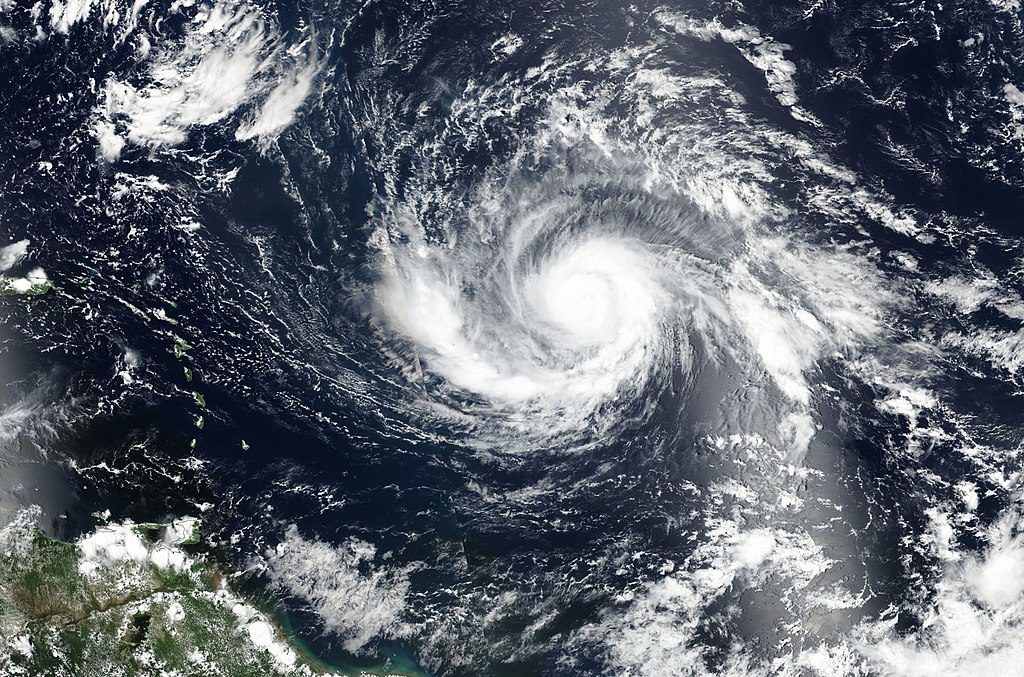
Precisely, that’s what happens with the .AI. AI for Artificial Intelligence? Not at all, it is the country code of Anguilla, a territory heavily affected by Irma Hurricane. Thus, many companies using .AI domain names have encountered difficulties in registering, managing or renewing their domain names.

But then, how do we do? This is precisely what is exciting in this intangible industry: if no guide is available to track real-time geopolitical movements and the consequences on registries’ DNS availability, Nameshield informs you in real time.

Do not hesitate to contact us if you have any questions.