Bitter taste to confectionary disputes

KitKat Nestlé - confectionary disputes


Last week the UK Court of Appeal ruled on the long running battle between Nestlé and Cadbury (owned by Mondeleze) over the attempt to register the shape of the KitKat bar in the UK.  Trademarks need to be a “badge of origin”. In particular registration of a shape mark requires good evidence of acquired distinctiveness to show that consumers rely on shape in a “trade mark sense”. The UK court has ruled that this is not the case for the KitKat shape. The mere fact that consumers recognise the mark is insufficient and the applicant must demonstrate that a significant proportion of the relevant public rely on the mark to indicate the product origin.

KitKat Bar - shape mark

Once again this shows how applications for non-traditional marks are more vulnerable to objections for lack of distinctive character.

But it is also interesting that the industry continues to fight these costly battles. Most of us might view these disputes as irrelevant and a waste of money but the parties involved see them as a battle for an all-important edge in the marketplace. The confectionery industry is extremely competitive – the aim is to ring-fence your brand and intellectual property rights in order to block others from cutting into your space.

There are quite a few registered shape marks in the world of confectionery and many of them have seen some level of trademark dispute.


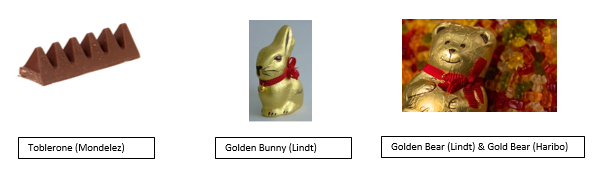
Some well-known shape marks:
Bitter taste to confectionary disputes

The maker of the Golden Bunny, Lindt, launched a chocolate teddy bear. Haribo, which invented gummy bears in the 1920s, said shoppers would confuse the two products, even though Lindt’s bears are made of chocolate and gummy bears are jelly sweets.


Examples of colour marks:

Color marks

Both these shades of purple are used for chocolate products and are owned by Kraft / Mondelez. But there has been an ongoing battle between Nestle and Cadbury about the legitimacy of use as a trademark. The British public has linked this shade of purple with Cadbury for over a century in the same way that the Milka shade is well accepted by a wider European consumer audience.

Good name, bad product

New product development is exciting – and costly. In addition to the essential R&D, market research and marketing initiatives, all products require a name which is (ideally) distinctive and available. Finding the right name in itself is a costly business that involves many steps: name & logo creation, trademark research, brand validation & strategy, trademark filing and protection). Depending on where you plan to launch and therefore protect your product name will define the costs which will probably range from $5,000 to $50,000+.

A failed product is a costly error for any company. In addition to the wasted time the failure can haunt companies for years to come. Now a new museum is opening in Sweden to celebrate these failures and hopefully to help companies learn how to succeed.

The Museum of Failure (museumoffailure.se) opens in Helsingborg in June this year with the tag line “Learning is the only way to turn failure into success”. The collection consists of over sixty failed products and services from around the world, many of which have carefully created trademarked names. The founder Samuel West comments that even big and competent companies fail. It is important to create a culture that accepts failure and learns from it.

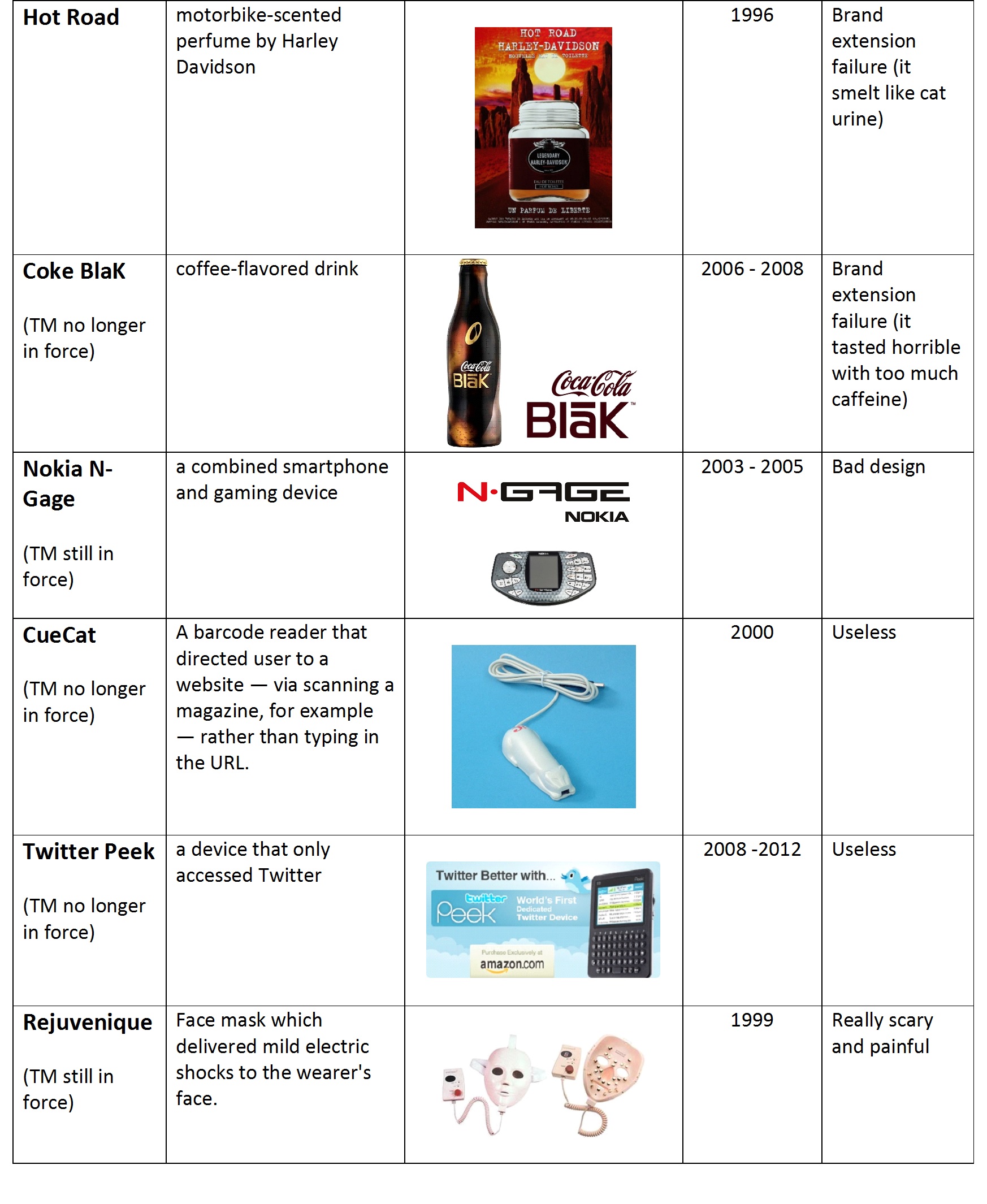
Here are some of the branded exhibits which have failed for various reasons ranging from poor design to products that were just plain awful or simply useless.


Examples of failed products


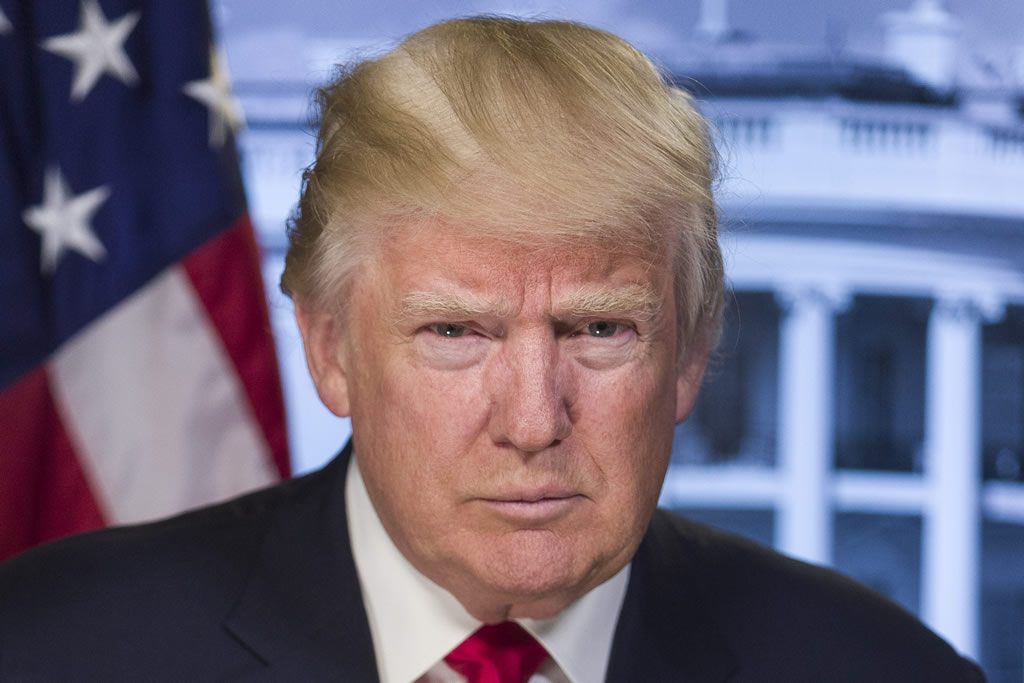
One interesting exhibit on display is a board game called Trump, The Game. This was similar to Monopoly but with Trump dollars, Trump properties and T-shaped game pieces. Trump, The Game was launched in 1989 but only sold 800,000 units instead of the estimated two million copies. It was re-released in 2004 but still failed to impress. It is interesting to note that the original trade mark is no longer in force but a new application was filed in the US at the end 2016.


Trump, The Game

What is the appropriate way to deal with inappropriate content on the internet?

The internet is a great place to find content of all sorts. Videos of cats doing crazy stunts, memes, thought provoking lifestyle messages. But this rich availability means ease of access to a wide variety of inappropriate content.

Inappropriate content means any material that is disturbing, improper, and just wrong. It can be images of real or simulated violence or of a sexually explicit nature. Recently there have been concerns raised around disturbing YouTube videos. These strongly resemble videos of popular cartoons but contain disturbing and inappropriate content not suitable for children. In some cases the videos are parodies, some are clear cases of copyright infringement where unauthorised use is made of authentic cartoons or characters, most are simply not aimed at an audience of children.

So what is the best way to deal with cases that you discover?

Google and social media sites offer reporting tools highlighting inappropriate content and copyright or trademark infringement cases.

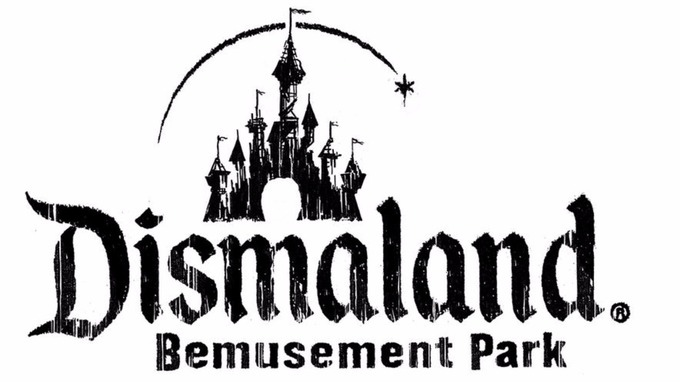
A copyright infringement submission is a legal process and only accepted from the right owner or their authorised agent.  But it is essential to consider if the content is being used fairly. Fair use generally covers adaptations of original works for the purpose of parody or comment. Parodic uses of copyrighted works are normally justified by freedom of expression but the key factor is that the public must be able to differentiate between the works. If the content is being used fairly then it is best to avoid submitting what might be considered a false claim and maybe even provoking further parodying activity. In summer 2015 the artist Banksy launched the clearly satirical Dismaland, an obvious play on words and “look and feel” of Disneyland, but Disney (sensibly) remained silent.


Dismaland


Inappropriate disturbing content should be flagged using the platform system. YouTube takes feedback very seriously and they appreciate people drawing attention to problematic content and make it easy for anyone to flag a video.  Flagged videos are manually reviewed 24/7 and any videos that don’t belong are removed within hours.  In addition they have a YouTube Kids app which helps limit access to flagged content.

Of course no filter is 100% accurate and nothing replaces vigilance. Careful monitoring can help ensure that your copyright protected content is not being used unfairly and allow you to submit takedown notices. But there is no product which can ever replace parental awareness.


YouTube

Alibaba’s use of technology to fight counterfeit reaps first rewards

In December 2016 Alibaba was placed on a US blacklist for fakes. A US industry watchdog called the company’s Taobao website (the world’s largest e-commerce platform) a “notorious” market for counterfeiting and piracy. Now Alibaba is diligently combatting this label. Via a program called Operation “Cloud Sword” big data technology such as advanced algorithms, machine learning, optical character recognition (OCR), and mapping technologies, is used to generate clues to help identify and take down fakes.

In January Alibaba sued two fake Swarovski watch sellers who allegedly link merchants with people willing to falsify purchases and write positive comments on its Taobao e-commerce platform for violations of goodwill and contract. The company claimed 1.4 million yuan, or about $201,000, in damages. Shenzhen police raided the seller and confiscated about 125 counterfeit watches after Alibaba’s claim. Alibaba used gathered and analysed data to identify the counterfeit Swarovski merchants and subsequently purchased a watch from the seller in a test-buy program.

Zheng Junfang, chief platform governance officer of Alibaba Group said. “We will bring the full force of the law to bear on these counterfeiters so as to deter others from engaging in this crime wherever they are.”

Has President Trump’s executive order on ‘Public Safety’ killed off Privacy Shield?

Governments rightly accord great attention to the importance of privacy and human rights but are also cognisant that there are situations where public authorities require access to the content of electronic communications. Three decades of negotiations and agreements on what constitutes acceptable levels of sharing of personal data and communications between the US and Europe resulted at the start of 2016 in the Privacy Shield agreement which provided obligations to protect and monitor the shared personal data of Europeans.

In his first week in office President Donald Trump signed six executive orders (Obama managed 5 in the same period). The order “Enhancing Public Safety in the Interior of the United States” has caused a huge reaction and controversy due to the attempted ban on citizens from seven countries but there are also important implications for data protection and human rights beyond those boarders.

Section 4 of the Executive Order instructs agencies to employ “all lawful means to ensure the faithful execution of the immigration laws of the United States against all removable aliens”. And Section 14 states that “agencies shall, to the extent consistent with applicable law, ensure that their privacy policies exclude persons who are not United States citizens or lawful permanent residents from the protections of the Privacy Act regarding personally identifiable information”.

These sections relate to all visitors and foreign nationals irrespective of nationality. A removable alien refers to all non-USA citizens. The Order makes it quite easy for any non-USA national to be considered a risk to public safety and therefore become a legal subject for agencies to access the content of electronic communications and personally identifiable information.

Fundamental stipulations of the Privacy Shield agreement are that companies operating in the EU can only share and send personal data to “third countries” outside the EEA if they guarantee adequate levels of protection, ensure equivalence of privacy protections for European citizens’ data in the U.S. and that the monitoring remains necessary and proportionate (unlike the U.S. Government mass surveillance programs which led to the invalidation of the Safe Harbour agreement). The essence of the fundamental right to respect for private life must not be violated.

By considering any non-USA citizen as a removable alien it is difficult to see how the equivalence of protection for US and EU citizens can be ensured.