Schmidt launches its new website in dot brand: Home-design.schmidt

Schmidt is one of the first French brands of kitchens, but also the first kitchen furniture export company in France.

Schmidt group has decided to launch its new website in « .brand » (dot brand), .schmidt and thus has joined many big companies which have made this bet, like BNP Paribas (mabanque.bnpparibas), MAIF (voyagepro.maif), Club Med (corporate.clubmed) or the latest, SNCF (oui.sncf).

Schmidt chose to regroup its activity under the « home design » designation which describes well its industry. The company is not only dedicated to the kitchen world but also proposes bathrooms and “custom-made” furniture for the entire house: dressing, TV furnitures… all with a design touch.

The domain name home-design.schmidt allows on the one hand, to optimize the SEO and on the other hand, to facilitate its development and its international communication. After its launch in Great Britain at the end of April, the website arrives in Belgium, and will continue with Spain, Italia and Switzerland by July the 4th.

The domain name home-design.schmidt is easy to recognize and to remember for general public.
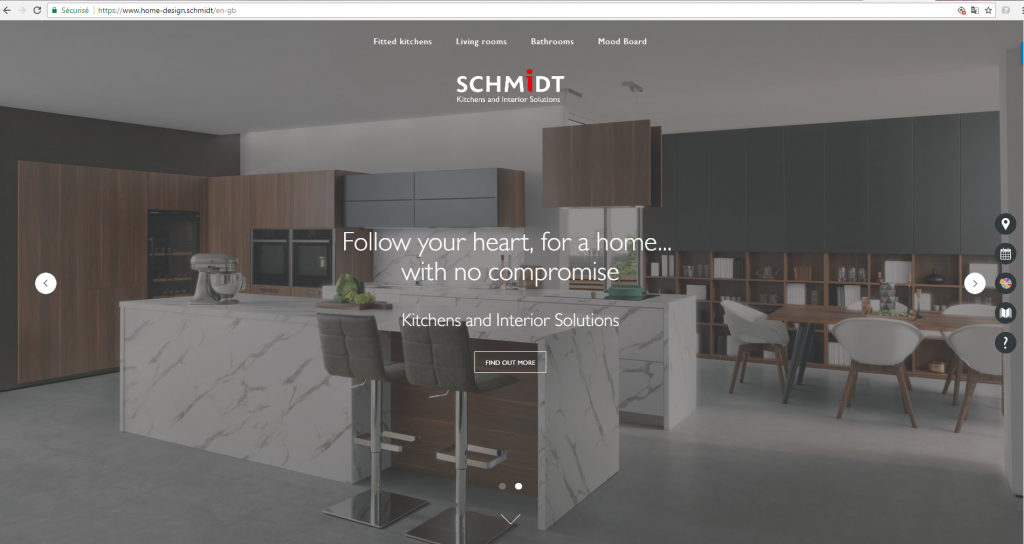
dot brand - Home-design.schmidt website
Home-design.schmidt website

But what is the benefit for brands to have their own extension?

In 2013, some companies (including some thirty French companies) wished to have their own « .brand » extension, in order to capitalize on their leading brand. Most of them wanted to secure and protect their naming spaces (to limit intermediaries in the chain of actors involved on a domain name registration). The purpose is also to have a domain name really distinctive and reassuring for the final consumer. The brands fight against cybersquatting, but this is an endless war. It represents an important annual budget and doesn’t limit the damages enough. The message of the brands owners of a « .brand » (dot brand) is the following: If you’re not on my « .brand » website, then you don’t buy the products or services of my brand.

This practice to communicate in « .brand » isn’t known enough by the general public. Of course, the consumers’ awareness should be increased in order to use extra caution during their navigation, and that means the domain name verification.

So having its « .brand » is a differentiating factor and will be more and more used for marketing purposes.
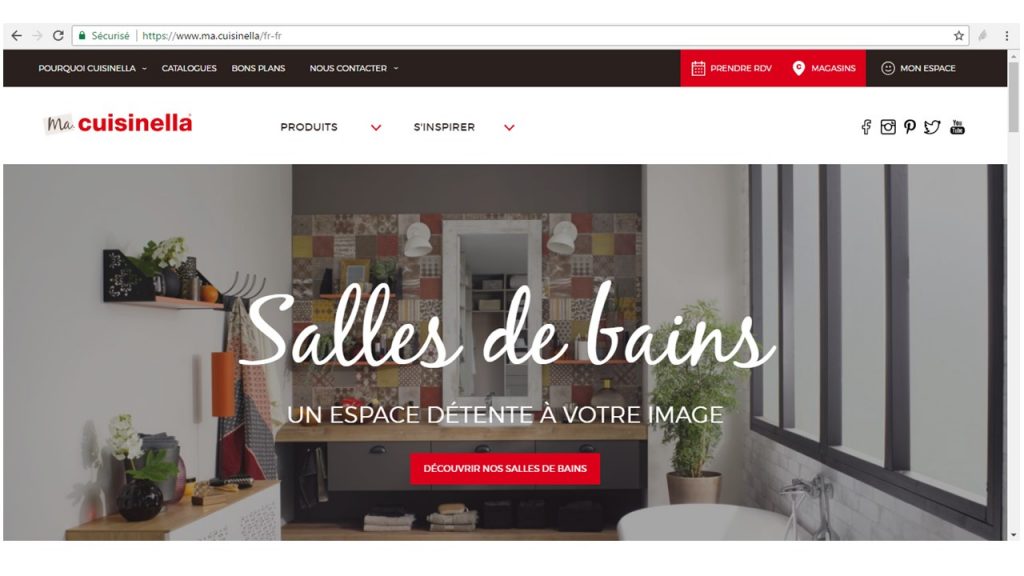

.brand - ma.cuisinella website
ma.cuisinella website

Cyber-blurring: the strategy used by Macron’s digital team to face cyberattacks

Cyber-blurring - the strategy used by Macron’s digital team
Photo : www.gouvernement.fr


May the 5th , 2017, two hours before the end of 2017 presidential campaign, thousands of documents owned by the campaign team of the candidate Emmanuel Macron have been leaked and have been made public on American forum 4Chan, relayed by Wikileaks. Social media have played an important role in the attack and content diffusion: internal discussion of the political party, briefing notes, pictures, bills, accounting, which represent 9 gigaoctets of hacked data.

Since the beginning of the presidential campaign, it wasn’t the first attack faced by the team of En Marche’s candidate.  Alerted of a potential attack a long time ago, they have set up a cyber-blurring strategy to defend themselves. This method creates dozens of false documents (false emails, false passwords, false accounts) trying to slow down hackers’ work. This strategy is often used in the banking field to protect their customers. (This diversion method is also called digital blurring.)


L'Express Twitter account - Cyber-blurring: the strategy used by Macron’s digital team to face cyberattacks
L’Express Twitter account


Even if Mounir Mahjoubi, digital director of the En Marche campaign, thinks to have slowed down the hackers’ job with this cyber-blurring method, despite these measures, the attack was not avoided.

The hackers didn’t ask for money in exchange of the documents publishing. These documents which are not compromising for the Emmanuel Macron’s team, were not monetizable because the hackers would have to sort out 9 gigaoctets of data in a few period of time.

Consequences are few on the presidential campaign and the En Marche staff was not really affected. This counterattack was well implemented.

The hackers who were against Macron, didn’t have the success desired. Nevertheless, this failure will get them to become smarter, more ingenious, less visible and better prepared for a next attack.

To be continued.

Connected objects: unavoidable in DDoS attacks?

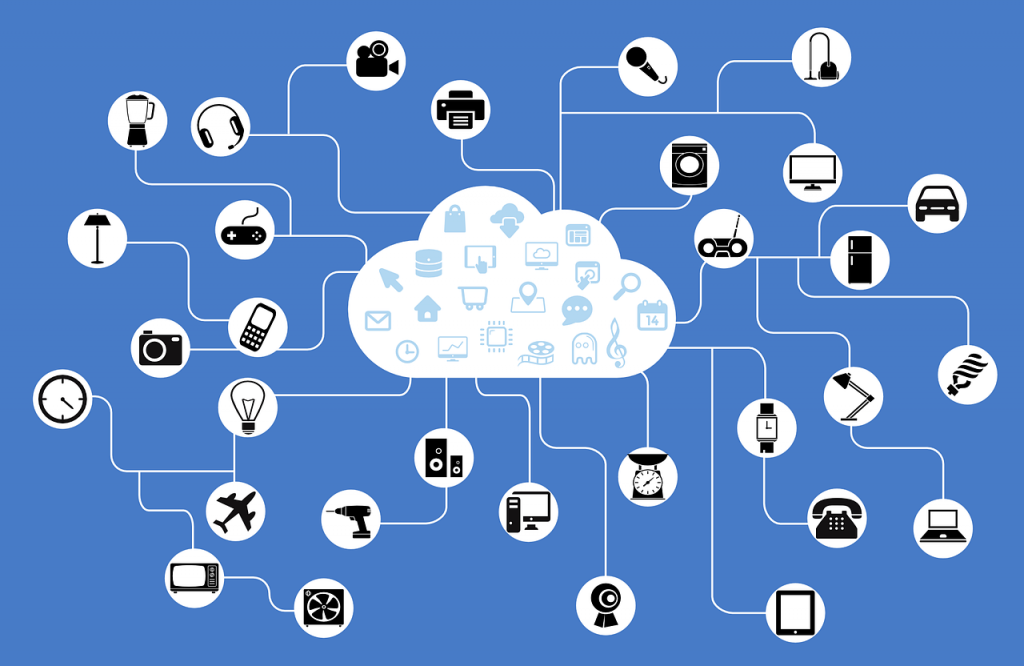
IoT- DDoS attacks


Nowadays consumers use and are around connected objects. The Internet of Things (IoT) includes all connected objects like a connected refrigerator, captor, light bulb, security camera, router or even a thermostat control. Their common point? To have an IP address and to be connected to communicate.

According to the American company Gartner, connected objects will reach 20.5 billion units by 2020. We will face an impressive growth of IoT in the years to come.

China, North America and West Europe will represent 67% of IoT in 2017.

However these connected objects are spreading frequently with security flaws, which is an opportunity for DDoS attacks!

Nowadays, Distributed Denial of Service (or DDoS) attacks are frequent. For hackers, it’s quite easy to set up attacks against an unprotected target. These attacks could lead to significant financial loss for companies by disruption of service (website or email) or indirectly, by the harm caused to the target’s image (bad buzz, bad reputation…).

With the arrival of connected objects, chances to be confronted to DDoS attacks are high.

These attacks are making a service unavailable by flooding the system with requests. With the help of digital and connected objects, hackers can send a massive number of requests on one or many DNS servers. They get to remotely control our objects because of their security flaws. If the DNS servers are not protected by a strong anti-DDoS filter, then they are under the risk of not absorbing the high number of requests and as a result, won’t respond to the user’s demands anymore.

In October 2016, DYN Company, DNS service supplier had been the victim of a DDoS attack by connected devices. DNS infrastructure services had been unavailable, which then impacted on their customers’ services: Twitter, Netflix, Spotify…

Many hours offline for these web pure players have a direct impact on sales revenue. DYN affirms that “Ten billion of IP addresses were touched” by this attack.

Last week, Melbourne IT Registrar was also a victim of a DDoS attack. Some of its customers were affected by this service disruption.

We might see more powerful attacks of this kind in 2017.

In the past, attacks were done by computers, today connected devices are a real weapon. Luckily those companies have affirmed wanting to reinforce security on their connected products.

DNS is an absolute priority. It’s essential to secure his strategic domain names by using highly secured DNS, so you can have a high permanent availability.

Nameshield offers a DNS Premium solution to gain performance and assure 100% availability.