From June 8th to the 11th, 2026, the ICANN community gathered in Seville, Spain, for the ICANN86 Policy Forum. This was the second time Spain had hosted a public ICANN meeting, following ICANN63, which was held in Barcelona in October 2018. Outside, Seville was already offering a taste of the Andalusian summer; inside, the air conditioning at the FIBES center allowed the 1,337 attendees to conserve their energy for the 116 scheduled sessions. This contrast was welcome as we turned to the hot topics of this edition, which was also followed by 548 remote participants.
Among the most talked-about topics were the application round for new generic top-level domains, which opened on April 30th, DNS abuse, and the growing impact of artificial intelligence on the domain name industry. These topics dominated discussions both in the hallways and in the meeting rooms.

The next round is underway, while SPIRT is being implemented
The application window for the new series of domain name extensions is already halfway to its scheduled closing date of August 12. In Seville, discussions focused primarily on final operational adjustments, applicant preparation, and the ecosystem’s capacity to handle a potentially large volume of applications. No official figures have been released regarding the number of applicants who have already submitted their applications. For closed extensions dedicated to brands—known as “dot brands”—the community largely agreed that an application window concentrated into fifteen weeks in the middle of summer is not well-suited to companies’ internal decision-making cycles.
While the process for implementing the application cycle appears to be largely stabilized, the discussions also highlighted the importance of the Standing Predictable Implementation Review Team (SPIRT), a mechanism designed to address questions of interpretation or difficulties that may arise during the implementation of the SubPro policy recommendations related to this new round. SPIRT will play an active role in the review of applications. It was created in direct response to an observation made during the 2012 round: the Applicant Guide Book could not anticipate every scenario encountered during the evaluation and delegation of new extensions. When an unprecedented problem arose, there was no clear mechanism to quickly determine whether to simply interpret the application guide, modify a procedure, or refer the issue to a much more cumbersome policy process. The Predictability Framework and the SPIRT were created specifically to address these issues, which are likely to arise again during this new round.
Artificial Intelligence and DNS abuse: pervasive issues that outpace ICANN’s capacity
Artificial intelligence was also a prominent topic during the sessions in Seville and was, in fact, one of the most closely followed themes. Several sessions were dedicated to the impact of AI on the domain name ecosystem and, in particular, on DNS abuse. Many attendees had to stand or sit on the floor.
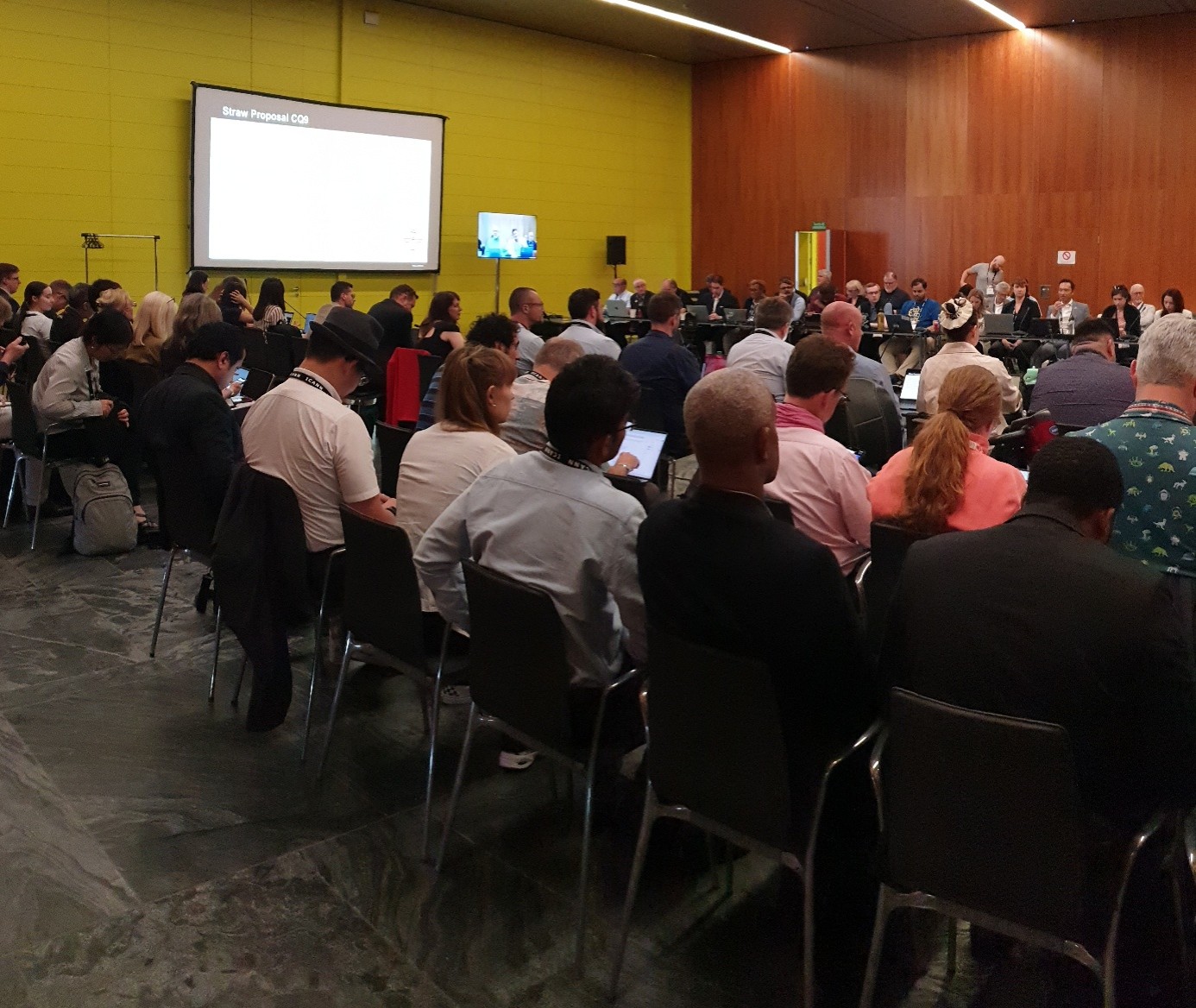
ICANN86 served as a reminder that AI does not create a new category of DNS abuse but rather enables the industrial-scale production of existing abuses without requiring specialized knowledge. It makes it possible to generate more malicious domains, more credible phishing content, and more targeted campaigns. However, it also offers new means of detection and analysis. This dual reality largely dominated the discussions in Seville, where many participants highlighted the risk that technological advancements could outpace the ability of ICANN’s governance processes to adapt.
The NetBeacon Institute summarized the impact of AI by highlighting an emerging phenomenon: AI has the potential to increase the scale and severity of attacks. It noted that the proportion of abuses generated by AI remains difficult to determine from the data, as automation is possible without AI. When it comes to remediation, AI can be useful provided it is used with caution and as a complement to human processes. Regarding governance, the institute advocated that policy work be based on broad principles and focus on specific problems that can be solved.
These sessions also highlighted a well-known reality: ICANN often appears out of step with market realities. Its multistakeholder model is based on lengthy, structured, consensus-driven policy-making processes. While this approach ensures the legitimacy of decisions, it makes it difficult to respond quickly to developments that can sometimes unfold in just a few months.
DNS abuse remains at the heart of policy work
The fight against DNS abuse remains, in any case, one of ICANN’s main policy priorities. Several initiatives are currently underway.
The first concerns “Associated Domain Checks,” often referred to as PDP1 on DNS abuse. This policy development process aims to examine the checks that can be performed on sets of interrelated domain names in order to improve the detection of abusive activities. The current timeline calls for the work to be finalized by November 2027.
A second PDP designated as PDP2, will focus on safeguards regarding access to application programming interfaces (APIs) used in the context of new registrations. This work, which primarily concerns registrars, has not yet begun but is among the next steps that have been identified.
A PDP3 will also focus on the obligations and measures applicable to registries in order to strengthen the prevention and handling of abuse. These two PDPs could be carried out in parallel if the necessary resources can be mobilized to tackle both issues at the same time.
On these various issues, the positions of the Governmental Advisory Committee (GAC) — the body representing governments — and the Country Code Names Supporting Organization (ccNSO) — which represents country-code top-level domain registries — continue to play an important role. The GAC regularly advocates for more robust measures and swifter action to address abuses affecting users. The ccNSO, while sharing the goal of combating malicious use, remains focused on preserving the unique characteristics of national registries and maintaining a balance between operational efficiency and regulatory constraints. The discussions in Seville confirmed that these two organizations will continue to influence the debates as the works move forward.
Heading to Bali and the first lessons from the new ICANN round
All eyes are now on ICANN87, which will be held in Bali at the end of October 2026.
This meeting is expected to take place at a particularly strategic time. By then, the application window for the next round of new extensions will have closed, and the community will potentially have the first concrete details on the level of participation If the schedule is followed, the traditional “Reveal Day” may have already taken place, offering an initial snapshot of the submitted projects, the most sought-after strings, and the organizations involved in this new phase of domain name space expansion.
ICANN86 demonstrated that the program for the new series of domain name extensions is progressing according to ICANN’s planned schedule. A widely shared concern among participants in Seville was that the application window — open for only 15 weeks, half of which falls in the middle of summer — is not suitable for .brand applicants. This is an issue that Nameshield raised on behalf of companies struggling to finalize their decisions on a Brand TLD project. The decision-making process for such projects is indeed lengthy due to organizational constraints, and the summer period is not conducive to these decisions in terms of the availability of many decision-makers.
However, it’s important to keep in mind that the project submission window is set to close on August 12, and as of the publication of this article, this is your very last chance to submit your project. Nameshield will do everything in its power to build and submit your application in the short time remaining, but you must act immediately.
At a time when artificial intelligence is making it possible to generate fraudulent content and increasingly convincing attacks on a large scale, the .brand domain extension emerges as a surprisingly simple solution to a complex problem. While AI can imitate a brand, it cannot register a domain name under its extension: a .brand is, in fact, a closed naming space reserved exclusively for the brand. Every domain within it is, by definition, authentic.
At the next ICANN summit, four months from now, it will already be time to take stock of the applications that have been submitted—potentially for competing brands that have seized this unique opportunity.